Resources on Fire

The recent nasty fires in California (and elsewhere – see this interactive fire map) have given rise to interest in fire science, fire ecology, and related careers and research. The Berkely Fire Research Lab has compiled a series of wide-ranging videos and resources on fire and fire science:

Learning Material

Overview / Wildfires / General Repository / Structural Fire Engineering / Engineering Disasters

After exploring our website or seeing one of the hundreds of news articles on wildfires, you might ask how you can learn more? What fire science or fire protection engineering is? And is there a career in it? Well, here we would like to give you a little introduction into the basics of Fire Protection Engineering and Fire Science. These resources have been compiled to answer common questions and are intended to give you an insight into the field from the basics to advanced topics. But if you are curious about more feel free to reach out to us on twitter (@gollnerfire or @FranzHRichter).

Source: Berkely Fire Research Lab

First OWU Sustainability Task Force Meeting (Zoom): Tuesday, Sept. 8, 6:30pm

Above left: mysterious Olentangy River object, near OWU Campus
Above right: possibly less mysterious, but still really interesting: Jess Wilber, STF guest from Citizens Climate Lobby; Jess is Great Lakes Regional Fellow International Outreach Intern

Join us for the first Sustainability Task Force (STF) meeting of the Fall 2020 semester: Tuesday, September 8 at 6:30-7:30 pm on Zoom.

Please contact John Krygier for the Zoom link.

For the Fall semester of 2020, we are focusing on work with the Citizens Climate Lobby – our OWU student group and the national organization.

We plan to set short and longer-term goals during the meeting. You will be part of those goals.

Joining us is Jess Wilber: a fourth-year student at Oberlin College with a double-major in Environmental Studies and East Asian Studies, a double-minor in Politics and History, and a concentration in International Affairs. She has spent the last two and a half years working for Citizens’ Climate Lobby, an international grassroots non-profit, non-partisan organization that empowers everyday people to work together on effective climate change solutions. She helped to pioneer their current programs for students in Higher Education. She was among the first members of the Campus Leaders Program, which seeks to educate and empower students to become effective climate advocates and organizers in their communities. As part of that program, she founded the Oberlin College CCL Chapter, or OCEAL, and worked with the local CCL chapter to get the Oberlin City Council to pass a resolution endorsing Carbon Fee and Dividend. She also got the same endorsement from the Oberlin College Sustainability Committee and President Carmen Ambar later that year. She was then hired as the organization’s first Regional Fellow, working to expand CCL’s Higher Ed Action Team and directly overseeing its growth. She has also held various internship positions with CCL, including Higher Education Outreach, Volunteer Education & Engagement, and International Outreach.

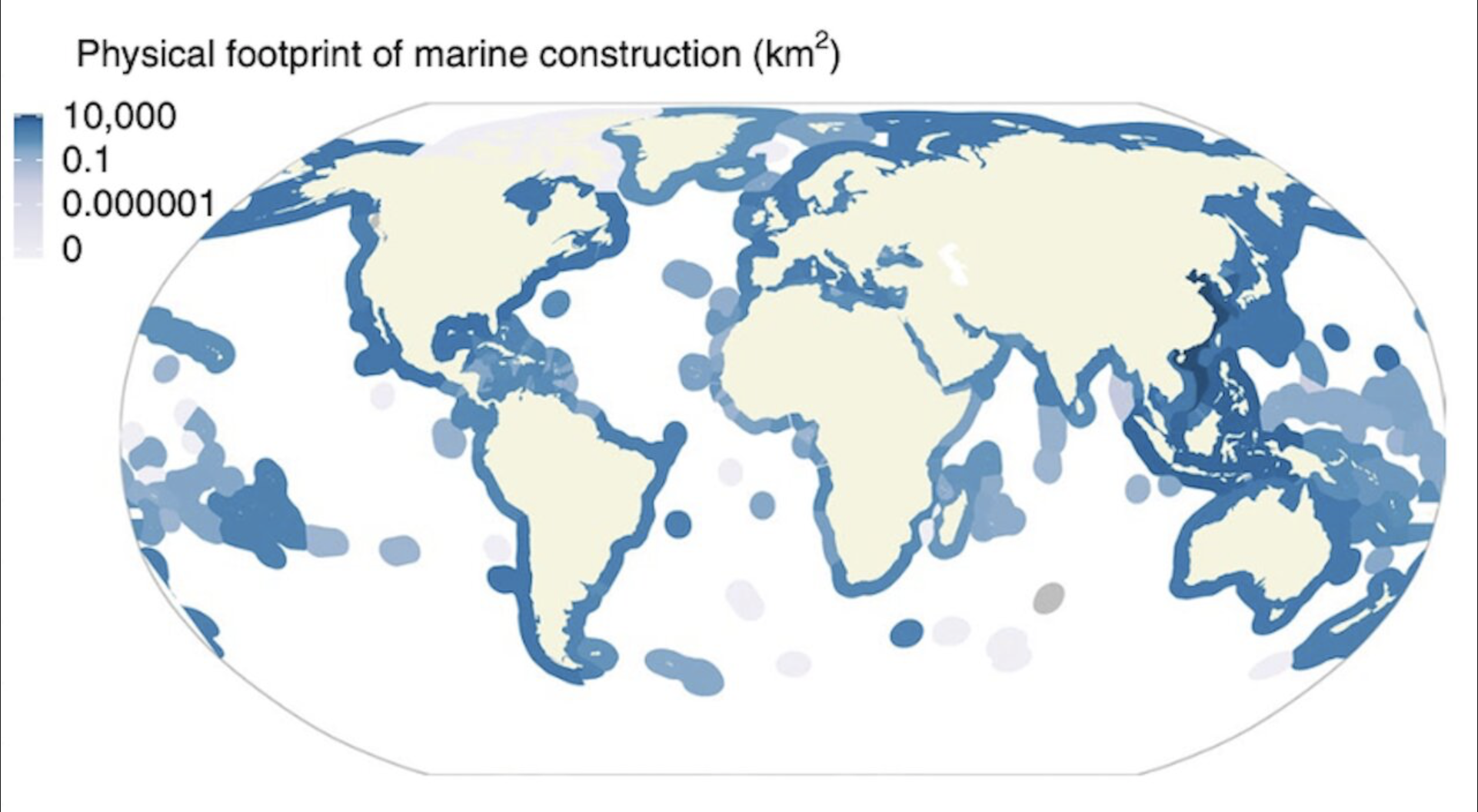
Humans’ construction ‘footprint’ on ocean quantified for first time

In a world-first, the extent of human development in oceans has been mapped. An area totalling approximately 30,000 square kilometres—the equivalent of 0.008 percent of the ocean—has been modified by human construction.

The extent of modified by human construction is, proportion-wise, comparable to the extent of urbanised land, and greater than the global area of some natural marine habitats, such as and .

Source: Phys.org News

Bird deaths down 70 percent after painting wind turbine blades

Something as simple as black paint could be the key to reducing the number of birds that are killed each year by wind turbines. According to a study conducted at a wind farm on the Norwegian archipelago of Smøla, changing the color of a single blade on a turbine from white to black resulted in a 70-percent drop in the number of bird deaths.

..in 2013, each of the four turbines in the test group had a single blade painted black. In the three years that followed, only six birds were found dead due to striking their turbine blades. By comparison, 18 bird deaths were recorded by the four control wind turbines—a 71.9-percent reduction in the annual fatality rate.

Source: ArsTechnica

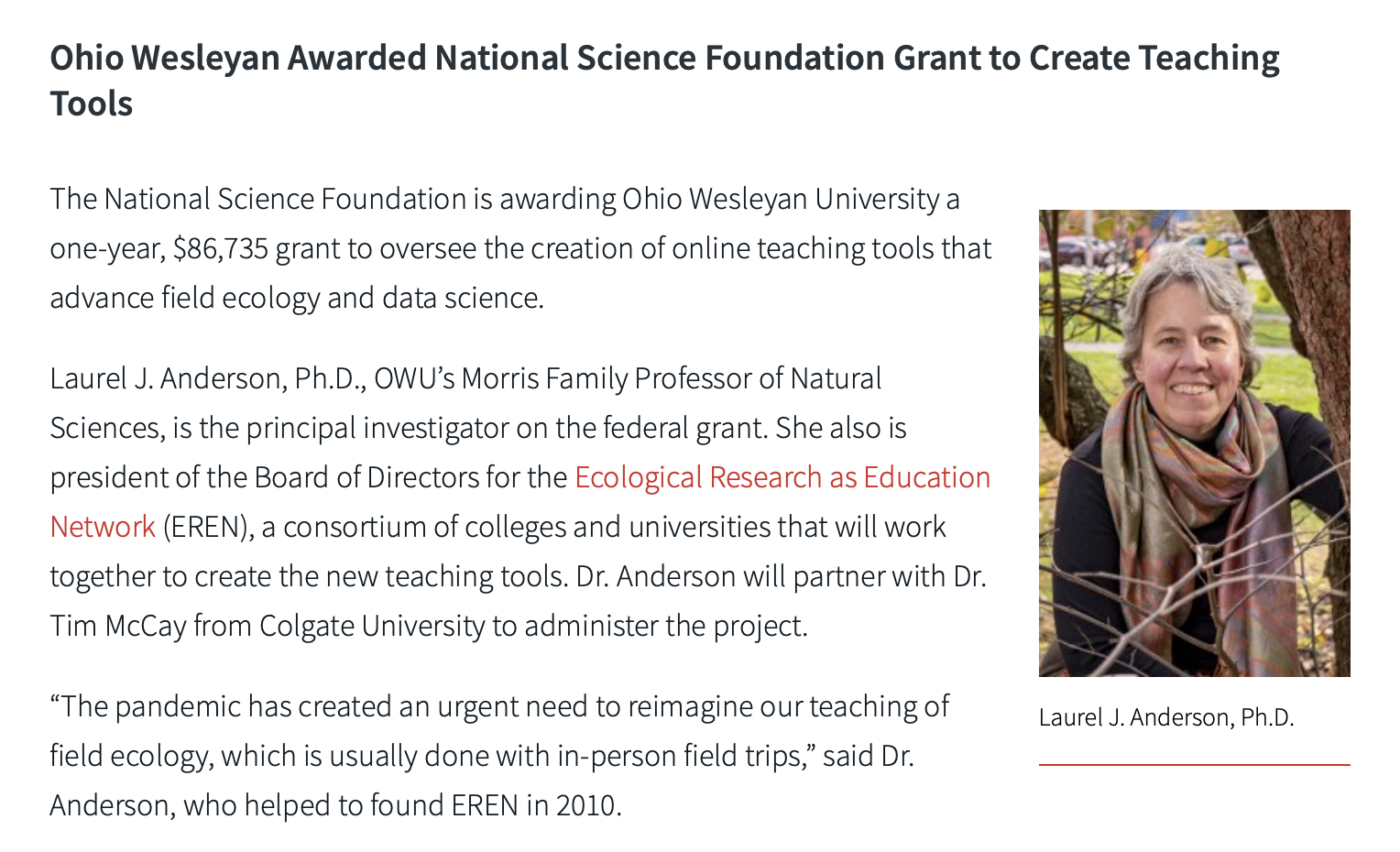
Dr. Anderson Receives NSF Funds for Online Field Ecology and Data Science

The National Science Foundation is awarding Ohio Wesleyan University a one-year, $86,735 grant to oversee the creation of online teaching tools that advance field ecology and data science.

Laurel J. Anderson, Ph.D., OWU’s Morris Family Professor of Natural Sciences, is the principal investigator on the federal grant. She also is president of the Board of Directors for the Ecological Research as Education Network (EREN), a consortium of colleges and universities that will work together to create the new teaching tools. Dr. Anderson will partner with Dr. Tim McCay from Colgate University to administer the project.

“The pandemic has created an urgent need to reimagine our teaching of field ecology, which is usually done with in-person field trips,” said Dr. Anderson, who helped to found EREN in 2010.

“However, field ecologists also use computer technology extensively to explore natural patterns at large scales,” she continued. “These projects allow us to meet our need to socially distance and have students collecting data wherever they happen to be. Then, we use online tools and datasets to see how their data fits into large-scale patterns.”

More: PRESS RELEASE: Advancing Science

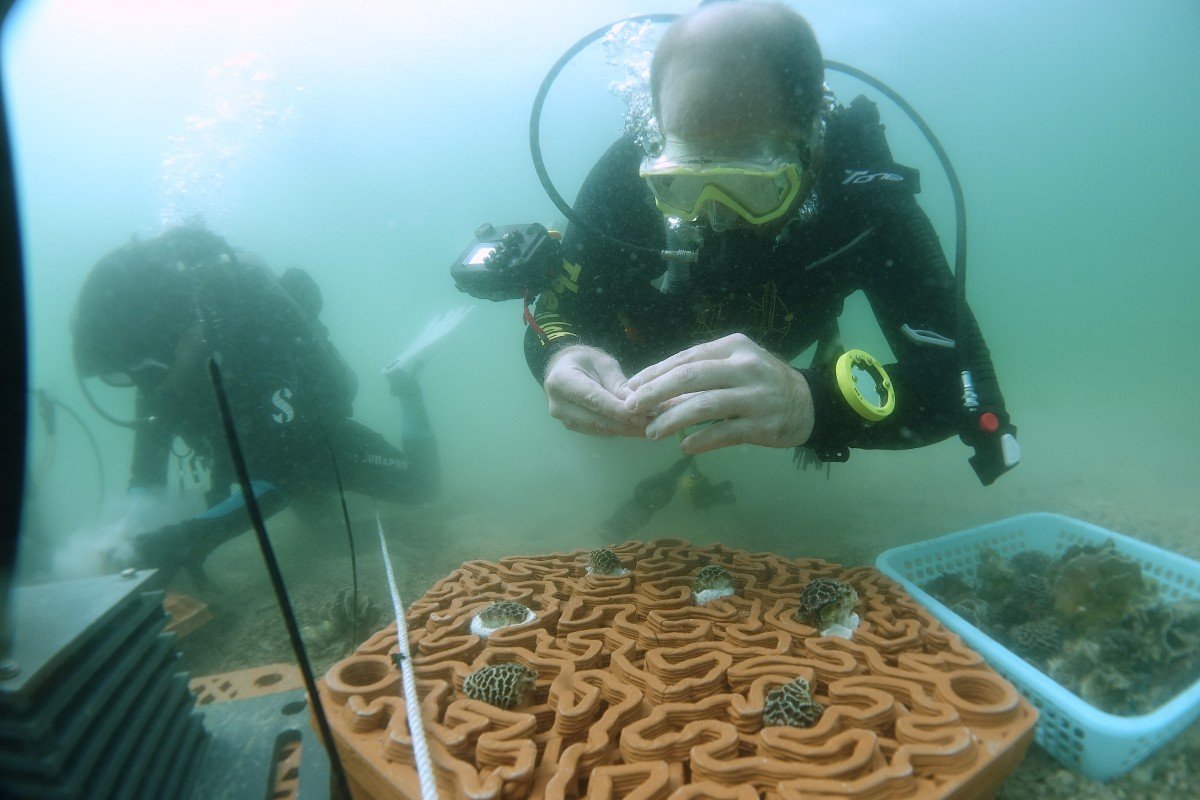
Coral Reef Restoration Tiles

In a world first, University of Hong Kong marine institute scientists lay clay tiles in marine park where coral was wiped out in twin ecological catastrophes

Seeded with living corals, the tiles quickly increased biodiversity. If found to work, they could transform reefs damaged by pollution, fishing and bleaching

Source: Tiles to restore corals, designed and 3D printed in Hong Kong, may be key to saving the world’s threatened reefs (South China Morning Post)

Research Shows ‘Linking Climate Policy to Social and Economic Justice Makes It More Popular’

Source:

Research Shows ‘Linking Climate Policy to Social and Economic Justice Makes It More Popular’

“The public wants a Green New Deal. The public wants green stimulus. The public wants to address inequality.”

Amid persistent calls for a green and just recovery from the ongoing coronavirus pandemic and nationwide protests against systemic racism and injustice, researchers on Friday detailed recent studies showing “policy packages that address the climate crisis alongside income inequality, racial injustice, and the economic crisis are more popular among voters.”

Earth’s carbon dioxide levels hit record high, despite coronavirus-related emissions drop


Source: Washington Post: Earth’s carbon dioxide levels hit record high, despite coronavirus-related emissions drop

There probably is more carbon dioxide in the air now than at anytime in 3 million years

The coronavirus pandemic’s economic downturn may have set off a sudden plunge in global greenhouse gas emissions, but another crucial metric for determining the severity of global warming — the amount of greenhouse gases actually in the air — just hit a record high.

According to readings from the Scripps Institution of Oceanography and the National Oceanic and Atmospheric Administration (NOAA), the amount of CO2 in the air in May 2020 hit an average of slightly greater than 417 parts per million (ppm). This is the highest monthly average value ever recorded, and is up from 414.7 ppm in May of last year.

Seed Activism

Source: Keeping Seeds In Our Hands: The Rise of Seed Activism (The Journal of Peasant Studies)

Every seed makes a political statement.

— Moudgil (2017)

Semantic innovations like seed commons, peasant seeds and seed sovereignty are a powerful expression of what may be termed as seed activism. In this opening paper of the JPS Special Forum on Seed Activism, we explore the surge of mobilizations the world over in response to processes of seed enclosures and loss of agrobiodiversity. A historical overview of the evolution of seed activism over the past three decades traces a paradigm shift from farmers’ rights to seed sovereignty. Some of the main threats to peasant seed systems – from seed and intellectual property laws to biopiracy, corporate concentration and new genome editing technologies – are analyzed along with strategies by peasants and other activists to counter these developments.

Search “Seed Activism” on Google

Guerrilla gardening is the act of gardening on land that the gardeners do not have the legal rights to cultivate, such as abandoned sites, areas that are not being cared for, or private property. (source)


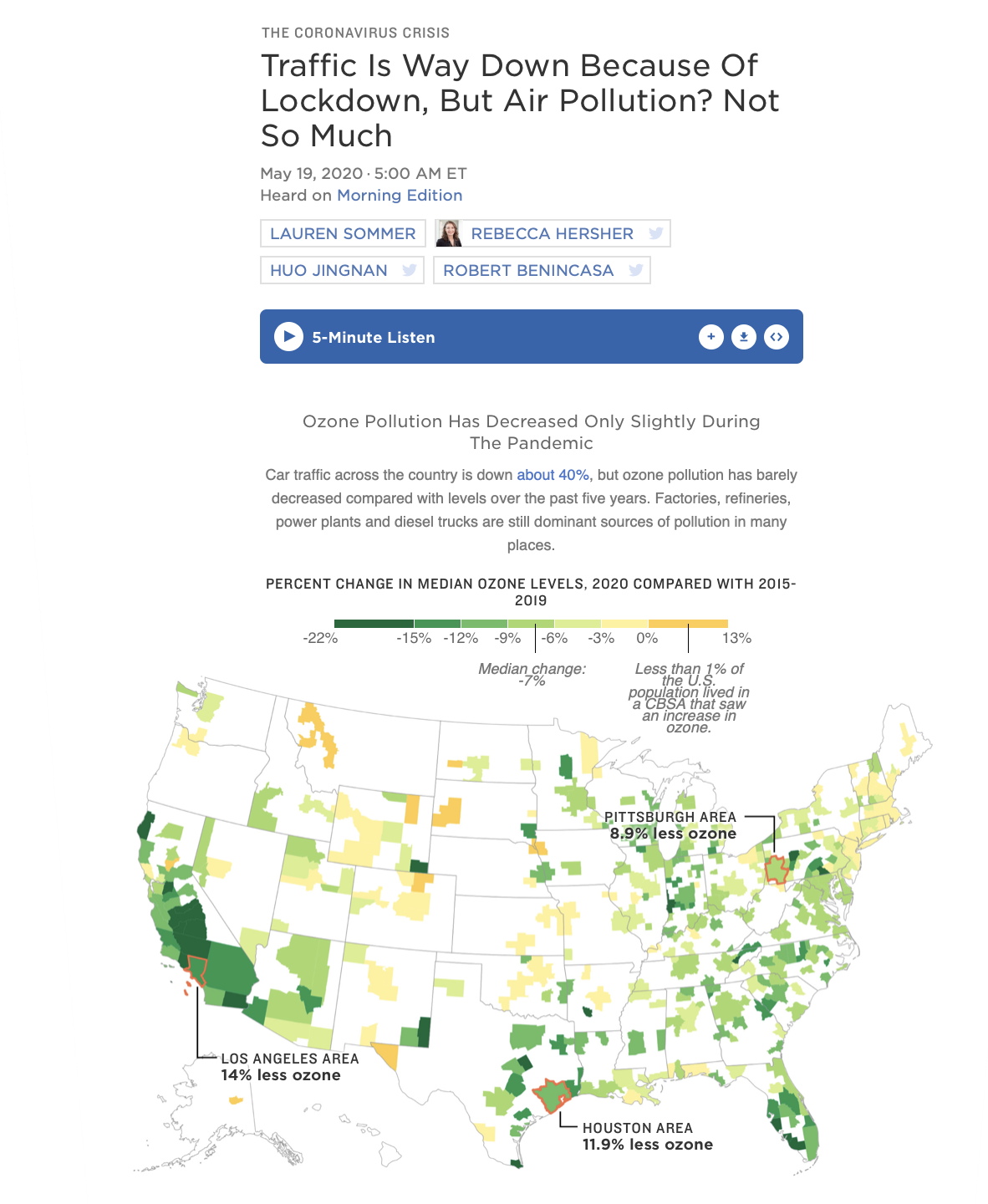
Traffic Is Way Down Because Of Lockdown, But Air Pollution? Not So Much


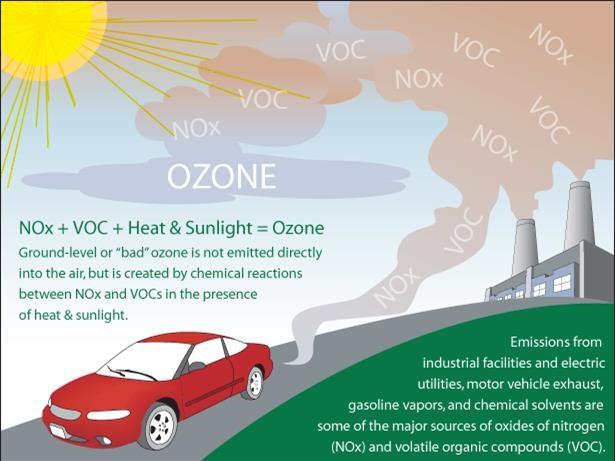
“In some cities, the amount of one pollutant, ozone, has barely decreased compared with levels over the past five years, despite traffic reductions of more than 40%. Ground-level ozone, or smog, occurs when the chemicals emitted by cars, trucks, factories and other sources react with sunlight and heat.”

Tropospheric Ozone Pollution

Source

Health Effects of Tropospheric Ozone Pollution

“NPR analyzed more than half a million air pollution measurements reported to the EPA from more than 900 air monitoring sites around the country. We compared the median ozone levels detected this spring with levels found during the comparable period over the past five years.”

“Our analysis revealed that, in the vast majority of places, ozone pollution decreased by 15% or less, a clear indication that improving air quality will take much more than cleaning up tailpipes of passenger cars.”

“In cities such as Los Angeles, stubbornly poor air quality during the coronavirus lockdown underscored how vast fleets of trucks are a dominant source of pollution. In industrial cities like Houston, refineries and petrochemical plants spew considerable air pollution. And in Pittsburgh and across a swath of the eastern U.S., much of the air pollution still comes from burning coal.”