Kocel, Week 1

Hi! My name is Emily and I am majoring in International studies and Environmental studies, with a minor in Spanish. I love traveling and just got back from studying abroad in Chile. I love animals and nature, I have three cats, two dogs and a turtle at home.


Before this reading, I had no idea what GIS was, or the importance it has. It was interesting that the history of GIS goes back to the 1960s, yet many people like myself are unaware of the significance of GIS analysis. It has become essential in many different fields from urban planning to public health. What I thought was most interesting was that GIS can be defined as both a system and a science. GISystems focused more on software and hardware, and GIScience is the more theoretical parts of spatial data and analysis. This introduction chapter peaked my interest in the applications of GIS and challenged me to think more critically about spatial data and how it influences real world outcomes.

For the first GIS application, I explored its use in water resource management. I am specifically interested in water depletion. GIS can be used to analyze and visualize water depletion by mapping various factors contributing to water scarcity such as groundwater levels, water usage patterns, land use, soil types and climate data. This provides information on where water depletion is more severe and why. 

I searched up “water depletion GIS California” and found  information on groundwater depletion in California’s central valley. Residents in this region rely on groundwater for agricultural growth, and this study found that 45 selected urban areas with a population average of 7 million people are at risk of Aquifer depletion.


Source: https://storymaps.arcgis.com/stories/0c1fce0700c4465180b3258c4751ecbb

For my second application, I searched “GIS application for animal shelters in Ohio” and I came across a website titled “Get started tracking at-risk animals using GIS data”.  This seems to be information on a project happening in northern Ohio. They use GIS to target at-risk animals in communities so shelters can understand where at-risk animals are coming from and determine where it makes sense to target planned interventions. GIS, in this case, is used to help animals.

Source: https://www.aspcapro.org/resource/get-started-tracking-risk-animals-using-gis-data

Yates Week 2

Chapter one is a beautiful introduction to the geographic information system basics, as well as the basics of mapping. Before reading this, while I had a general idea of what GIS is and what it is used for, it was largely undefined and nowhere near the proper scope of this tool. Mapping and geospatial analysis are more relevant to my line of study than I previously realized, by a large margin. I’m already thinking of a multitude of ways that this software can help me in my future research endeavors. Besides an introduction to mapping as a whole, this chapter also introduced a lot of concepts that will become important later down the road. Of these, I think the most important concept is the process of performing an analysis. It reminds me a lot of the general scientific method, which makes sense as it is a way to perform scientific research, however it is more specific than the usual method. With mapping, the main purpose is to get an idea about large amounts of geospatial data through visual media, which can allow conclusions to be drawn more easily than by just looking at the raw data, so the method for performing analysis reflects this notion. I also find the clarification on things such as geographic features and geographic attributes to be highly useful. Being able to put information into neat categories is something I prefer when learning, so having these broader categories, such as discrete features versus continuous features, or the difference between sorting by counts and amounts is very nice. I will likely be referring back to this chapter a lot in the future, as this class continues.

Chapter two is focused on the nuances of mapping itself. It focuses on teaching the reader how to effectively make a map, and how to ensure that it is easily readable and understandable. This is an important thing to consider, as mapping is a form of data analysis, and if done incorrectly, could cause results to be inconclusive or skewed. A good chunk of the chapter is focused on how to properly group visual data into categories, and what using different styles of map can do to a reader’s understanding of a map. It goes over many types of maps, such as single-type maps, which are maps where only one category or feature is visualized, such as all crime in an area, or all roads. These maps can be useful for getting basic data about the distribution of the category, but are not highly detailed, meaning more complex conclusions cannot be drawn from them. This chapter also begins to introduce factors of how GIS creates maps, such as how it uses a coordinate system to assign locations on a map, or how it uses tables of data sets to form results. One big part of this chapter is a discussion of how much detail should be included in a map. To put it simply, it depends a lot on what one is trying to show with the map, and what would be too complex for the reader to understand. For example, if a map is too complex, it can draw away from the conclusion one wants, such as including too many vegetation categories and being unable to distinguish the broad interactions. This is also important when it comes to map scaling, as using too much or too little of a location can make it difficult to understand the distribution of results. Not to mention, the scale can affect how many categories one should use for visualizing data, as at smaller scales general data is less useful.
Chapter three is all about how mapping changes when using numerical values as opposed to general categories. Specifically, it focuses on how to show the variance between amounts in the data as an appropriate visual. This is more difficult than mapping by category, as there are more factors to consider. For one thing, the numbers need to be split into categories in order to show any data, but deciding what kind of split is highly dependent on the data being used. There are four main ways to split data, all of which have their own positives and negatives.  These are defined as natural breaks, which are when the data is grouped based on natural groupings in the values, quantile, which is when the data is grouped so that each class has an equal amount of features, equal interval, which is when the data is split evenly across the entire value set, and standard deviation, which is when the data is organized based on how many standard deviations it is away from the mean. The main concern with most of these is skewing the data, either through outliers causing the distribution to appear different, or ensuring that data is not grouped too much. Regardless, there are cases where each of these types is the most useful, such as equal interval being very useful for mapping continuous data, or standard deviation being useful for displaying what features are apart from the average. This chapter also goes in-depth about the five styles of mapping quantitative data, and what situations they are most useful in. This is a highly important chapter, and I will likely be using the skills described in it a great deal.

Grogan Week 1

Hey, my name is Abbie Grogan. I am a junior and I am a Pre-Professional Zoology major with a chemistry minor. I am a captain of the women’s lacrosse team and a part of Kappa Phi, the PreVet club, and I work as a vet tech. I enjoy relaxing in my free time and trying new food.

Going into this course, I have very limited knowledge of GIS systems and applications overall. I did know their importance but I was not aware of the vast variety of uses that they can be applied for. After reading Schuurmans first chapter of GIS: A Short Introduction, I enjoyed learning the history behind the GIS development and how its uses grew over time. From this I was able to determine that GIS analysis has had very impactful implications for cities, social trends, health patterns, and environmental issues. I did not know how widely they could be used. To be completely frank, I was not expecting to truly enjoy this reading but I was captivated by the unknown importance of this type of tool.

The first application I came across was emergency response planning. In emergency situations. One team called the Center for Robot-Assisted Search and Rescue (CRASAR)  collected aerial imagery that helped to create vital GIS maps that visualized Hurricane Ian’s impact and guided emergency responders to find those in need of rescue faster than ever before. Using GIS, areas of risk and vulnerability are highlighted by combining critical infrastructure, hazard, and demographics data into a single map.

Hurricane Ian Searchers Saved Time with a Shared Map

https://www.esri.com/about/newsroom/blog/hurricane-ian-searchers-shared-map/

The second application I found was related to neighborhoods that use emergency departments within North Carolina. This specific GIS shows the changed in ED use over 2 years depending on the neighborhood they were in.

Percent Change in Emergency Department Usage by Zip Code, Wake County Community Health Needs Assessment, North Carolina, 2007-2011

GIS and Spatial Health


Heumasse Week 1

Hi! My name is Claire Heumasse, and I’m a Junior from Scarborough, ME. I am majoring in Biology at Ohio Wesleyan University and am involved in the Cheer team, Women in Science club, and Rock climbing club. In my free time, I enjoy ice skating and reading books.

In reading Schuurmans first chapter of GIS: A Short Introduction, I expected a boring, technical overview, but I was surprised by how easy it was to understand and how interesting it turned out to be. Schuurman highlights how GIS is not only a practical tool but also a lens to understand and analyze complex spatial data. I also found the historical development of GIS fascinating, particularly how overlay techniques evolved from physical maps to digital platforms. What stood out most was the discussion on GIS’s versatility. From urban planning to public health, the potential applications of GIS are seemingly endless. I was especially intrigued by how GIS is used to map crime patterns and analyze their spatial relationships—a tool that can influence public policy and improve safety.

For the first GIS application, I explored its use in Indonesia. GIS is employed to monitor deforestation in Kalimantan and Sumatra. By mapping forest cover changes over time, researchers can identify illegal logging hotspots and assess the impact of deforestation on biodiversity. This application is crucial for protecting endangered species, such as orangutans, that rely on these habitats.


Source: https://www.arcgis.com/home/item.html?id=60e5dfae803c48ac932a9117f28c6694

For the second application, I searched “crime mapping GIS” and found an example in Houston, Texas. GIS is being used to analyze violent crime patterns in the city, helping law enforcement allocate resources effectively. By creating heatmaps of high-crime areas, officials can identify correlations between crime rates and urban features like poorly lit streets or abandoned buildings. For instance, GIS data has highlighted specific neighborhoods where targeted interventions, such as increased police presence and community programs, have led to measurable reductions in crime.

Source: https://www.arcgis.com/apps/instant/sidebar/index.html?appid=1427304b9e6048a488e0be90b3aa1cd7

Powell Week 1

Hi, my name is Jes Powell.  I’m a senior and I am majoring in Studio Art.  I am from the Cayman Islands and I live/grew up on the beach.  I love photography and writing.

Chapter 1 of Schuurman’s GIS: A Short Introduction discusses the importance of Geographic Information Systems (GIS) and how it can be found everywhere.  GIS is used for a variety of different tasks and oftentimes people don’t realize how extremely impactful it can be.  To each individual GIS is important and effective for various different personal reasons.  For example in a city GIS can be crucial when it comes to planning residential, industrial, and commercial zones; this is just one of the many ways that GIS can be used.  GIS uses mapping and data analysis to find solutions and allows for data to be interpreted in a way that can be an aid for planning and research.  There are two main components of what the acronym GIS stands for; this being GISystems and GIScience.  GISystems more so focuses on ways of analyzing and mapping out data and is more commonly thought of when considered the acronym GIS.  On the other hand GIScience focuses more on the overall explanation of questions related to how GIS software puts out its output.  I think it’s interesting that there are two different meanings to the acronym of GIS and that it is not just simply Geographic Information Systems.  The most important part about these two faces of GIS discussed in this section of the chapter is how spatial phenomena is translated into digital terms; this is essentially what connects both GISystems and GIScience.  GIS is an extremely diverse tool that impacts everyday life for a majority of people.  I think most people don’t realize that GIS goes beyond just something that is technological as it can be the deciding factor for numerous things.  GIS technologies have a major role in food production and agriculture, and can impact government and business decisions.  GIS technologies impact every part of our life and it is an important tool to understand what is used for and what exactly it means and what type of data is getting taken in and what data is being outputted.

GIS Applications

  1. I looked up how GIS applications are used for the Cayman Islands and I found how it can be used in Grand Cayman (the main island)  to determine which areas are more exposed to flooding and which areas are more exposed to specific hurricane categories.  I think this is important information to take into consideration as it can be necessary for future plans of how land is used and what developments are made.

    https://link.springer.com/article/10.1007/s11069-010-9539-0
  2.  The second thing I looked up related to GIS applications is how it can be used to see the specific areas in the Cayman Islands that are turtle habitats.  This is important as these areas are protected during turtle nesting season and there are specific turtle nesting sites that you are not allowed to go to so that the process isn’t disrupted.  I think the use of GIS applications to be able to see this information is crucial because it ensures that these marine animals are able to safely and effectively go through their normal process of nesting and returning to the ocean without natural and man made obstacles that would otherwise prevent them from doing so.

    https://www.frontiersin.org/journals/marine-science/articles/10.3389/fmars.2021.663856/full


Flores week 1

Hi my name is Daniela Flores (she/her) I am a sophomore majoring in environmental science. I’m from Philadelphia PA, I love listening to music and going on walks.

Chapter 1

When people think of GIS, they believe it’s only software for geographers because of its ability to document and log locations. In reality, everyone uses it, and it is a helpful tool for anyone in any subject or job position. GIS can help with basically anything that is in any place that can be documented. 

With GIS we can visualize things we couldn’t when it was just with pen and paper. We can see the repercussions of potential construction in areas and how it can damage the environment without doing anything to the area. GIS reminds me of a layered cake, layering different layers of the land, soil, forest, housing/buildings to create one map that includes all the characteristics of one area. One thing I like about GIS that this chapter talked about was how when using GIS the facts and data don’t have to be as precise, there can be guesstimates to see how things would look while finalizing data or making hypotheses while mapping. GIS is also good for visual learners, they can see the separate layers of the area and learn about it in an easier format instead of reading long articles about data. With this visual format, it can be easier to solve problems as they are now imitating what someone is trying to hypothesize. With GIS we are not only able to address environmental concerns but also human concerns like crime, femicide, and social changes. GIS can help with anything you can think of, it is a powerful, and accessible tool that anyone can use. I wonder if GIS has been purposefully used to urbanize and gentrify certain areas because they seem like good areas to build businesses without identifying the places that were there before. 

Two GIS applications 

One GIS application I looked up was feminicide, I found one based in Antioquia, Colombia. This paper focuses on studying feminicide from a geographical perspective, and seeing how the relationship with drug trafficking in geographical locations impacts feminicides. 

Source: The spatial heterogeneity of factors of feminicide: The case of Antioquia Colombia

The second GIS application I looked up was Landslides in Colombia. They used GIS to estimate groundwater levels and compare them to rainfall events. They also compared it with earthquakes to see their relationship and how they could predict landslides. 

https://onlinelibrary.wiley.com/doi/epdf/10.1002/%28SICI%291096-9837%28199609%2921%3A9%3C853%3A%3AAID-ESP676%3E3.0.CO%3B2-C


Fondran Week 1

Hi! I am Jade Fondran, a sophomore studying Zoology and minoring in Environmental Science. I am from Euclid, Ohio a suburb of Cleveland. I have a dog, two cats, and three fish.
Before reading this article I was unaware at how prevalent GIS is in each of our lives. I was surprised to know that a company like Starbucks uses GIS in order to strategically place each of their locations. I found this specific quote explaining GIS to be interesting “It is not a piece of software, but a scientific approach to the problem: ”how do we define crisp boundaries to demarcate fuzzy and changeable phenomena?” ” I thought this was an insightful way to explain how GIS can be used for many different things.

The identity crisis of GIS began in the 1960s when Ian Mcharg was determining how to fit a highway into the landscape properly. He used overlays of paper with forests, streets, buildings, etc on each layer and determined the best route. This overlay method became the basis for GIS and other spatial analysis techniques.  This concept of overlaying paper was translated into one of the earliest GIS systems on a computer. I always find stories of how some of the first computers worked and how they were created to be very fascinating.

In a later section, What Does the Acronym GIS Stand For? The Two Faces of GIS , it explains how  important  the translation of spatial phenomena is made into digital terms. Slight differences can change the results for analysis, and it is important for GIScience. I found it interesting that GIS is multifaceted and is not just one thing. Overall, I found this reading insightful and thoroughly introduced me to what GIS is and how important it is to society.

  1. “GIS Application on Endangered Sharks”

GIS is used very often when determining where animals are most threatened. Making it very important to those who work in conservation. For example, the picture I found shows areas in which habitats of certain animals are protected under the Endangered Species Act. This specific example was made by NOAA Fisheries in order to make it easier for the public to identify protected areas.
2. “GIS application on plants”

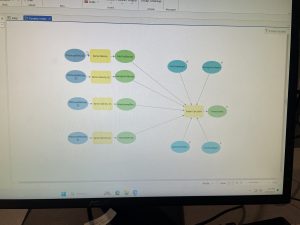
GIS application can be used frequently when dealing with agriculture. For example, it can be used to help determine crop growth while analyzing fertilizer, soil type, and terrain. This map shows “Fertilizer application assessment based on data from field equipment, processed with EOSDA Crop Monitoring.” GIS software is very important in many aspects of agriculture and benefits all who utilize it in order to have the most efficient practices.

https://sites.owu.edu/geog-291/wp-content/uploads/sites/208/2025/01/print.pdf

Sources:

https://www.fisheries.noaa.gov/feature-story/new-app-makes-endangered-species-habitat-easy-find

https://eos.com/blog/gis-in-agriculture/

Banti Week 1

GEOG291 Introduction


Hello! My name is Panagiota Banti but people call me Naya! I am an international student from Greece and I am double majoring in Computer Science and Data Analytics. My favorite food is sushi and I love going to the gym and hanging out with my friends. On campus, I am also a cheerleader and part of the Computer Science and Programming Club.


To begin with I don’t have any knowledge about GIS. This passage helped me understand a lot about GIS from its history to questions a tool like this might raise. The passage successfully explained the history of GIS and how it evolved to become an important tool in many different fields. GIS is used for mapping and not only. It analyzes cities, social trends, health patterns, and environmental issues. However, there are some issues concerning society that haven’t been discussed thoroughly. 

This type of technology has many uses but it raises the question of what its true purpose is because it is used in different ways across various fields. GIS can be said that is shaped by a combination of social and academic ideas and its data is used to help with important decision-making. Therefore, we understandand analyze the world around us and GIS plays a fundamental role in our everyday lives without knowing it. I was fascinated by how many uses GIS has that we didn’t know of. I thought that GIS is solely used for environmental or geographical reasons and therefore, learning about all its uses is something that surprised me.


Something that I found interesting is the privacy concerns GIS raises data privacy and centralization of powerbecause GIS can track everything and keep private information. Even more concerning is the fact that there is no privacy safeguards for this issue. 

Another interesting thing that I didnt know about is that GIS is something that younger people know already when coming to college and that shows again how important this tool is starting to be in our everyday lives, and the same goes in academia. There are still challenges in collecting and organizing data from GIS but this issue seems to be in progress. 


GIS Applications


  1. Contaminated sites 

GIS applications in contaminated sites are essential for, monitoring, and managing environmental contamination. Hazardous materials such as heavy metals, chemicals, radioactive substances. The research I found was how GIS protected people from contaminated water. 

https://mcwec.org/2023/11/using-gis-technology-to-protect-people-from-contaminated-water-part-1/

  1. Crime 

GIS helps law enforcement agencies make data-driven decisions by giving them visual representations of crime trends which makes it possible for them to recognize patterns, distribute resources effectively, and create focused treatments.

https://crimetechweekly.com/2015/10/20/what-is-geospatial-crime-mapping/

White Week 1

  1. Hi! My name is Will White. I am a junior here at Ohio Wesleyan. I am a Business Management major and also a member of the Ohio Wesleyan’s Men’s Lacrosse team where I play goalie. I am from Pelham, New York which is right outside of New York City.


  1. Chapter 1 of Nadine Schuurman’s GIS: A Short Introduction outlines the growing significance of Geographic Information Systems (GIS) in modern life and its diverse applications across fields like urban planning, agriculture, epidemiology, and commerce. GIS’s ability to integrate spatial data and generate meaningful insights has made it indispensable, though its identity remains fluid and multifaceted. Schuurman highlights the dichotomy of GIS as both a technical tool (“GISystems”) and a broader field of inquiry (“GIScience”).One key takeaway is how GIS has evolved from simple computerized cartography to a sophisticated analytical tool. For example, it enables urban planners to visualize traffic impacts or epidemiologists to track disease outbreaks, emphasizing its capacity to combine spatial analysis with intuitive visualization. Schuurman also stresses how GIS has shaped daily life, from determining waste collection routes to optimizing retail locations like Starbucks. What stands out is the tension between the technical and philosophical aspects of GIS. While it excels in creating visually accessible data representations, the author argues that GIS users must understand the underlying assumptions and potential biases in data encoding and boundary definitions. For instance, how we classify spatial phenomena—such as community boundaries—can drastically affect analysis outcomes. Schuurman also touches on the collaborative and ethical dimensions of GIS, mentioning feminist perspectives and Public Participation GIS (PPGIS). These approaches seek to democratize GIS technology, emphasizing inclusivity and questioning whose interests GIS serves. Overall, this chapter provides a balanced introduction to GIS, celebrating its technical achievements while encouraging critical reflection on its societal impacts. It effectively sets the stage for readers to explore GIS’s complexities beyond its surface applications, prompting questions about its role in shaping how we interact with and interpret the world.


  1. GIS plays a crucial role in crime analysis by helping law enforcement visualize and understand crime patterns. Through mapping hotspots, it highlights areas with high crime concentrations, enabling targeted patrols and resource allocation. For example, police in Los Angeles have successfully reduced crime rates by focusing efforts on these mapped hotspots. Additionally, GIS supports predictive policing by analyzing historical data and environmental factors to forecast where crimes are likely to occur, allowing proactive measures to prevent incidents. A crime density map of Washington D.C. illustrates how GIS identifies areas with frequent incidents, guiding more effective strategies. Overall, GIS enhances crime prevention and contributes to building safer communities


https://www.esri.com/en-us/industries/law-enforcement/strategies/crime-analysis?utm_source


Siegenthaler Week 1

Introduction

Hi, my name is Will Siegenthaler. I’m a junior majoring in Economics. I play lacrosse, enjoy playing basketball, and like to read in my free time. This is my first experience with GIS, and I’m looking forward to learning more about its applications and relevance in different fields.

Schuurman Chapter 1

Before reading Chapter 1 of Schuurman, I didn’t know much about GIS or its history. It was interesting to learn how GIS was initially viewed as just a computerized version of mapping and how its broader applications weren’t recognized early on. I found the discussion about how spatial analysis differs from traditional mapping to be particularly thought-provoking, especially the idea that GIS can layer and analyze data to answer complex questions.

The chapter also emphasized how GIS became a multi-disciplinary tool, used by geographers, architects, and others. It was surprising to read about the initial resistance to GIS, especially from cartographers who preferred traditional methods. Over time, though, it has proven to be far more powerful than paper-based systems.

One point I found compelling was how GIS can reflect user biases, including gender biases, which can have far-reaching implications. It raised questions for me about how the technology can be refined to minimize unintended biases. Overall, the reading showed me that GIS can be a valuable tool in fields like economics, urban planning, and environmental science, which I hadn’t considered before.

GIS Applications

  1. Crime Mapping and Analysis
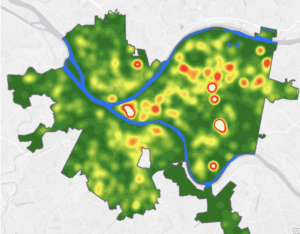
    GIS is widely used in law enforcement to map and analyze crime patterns. Heatmaps created with GIS help identify crime hotspots, allowing police departments to allocate resources more effectively. For example, predictive crime mapping uses historical data to forecast where crimes are likely to occur, helping to improve public safety and reduce crime rates.

Source: ESRI Blog – Crime Mapping and GIS

  1. Urban Planning and Smart Cities
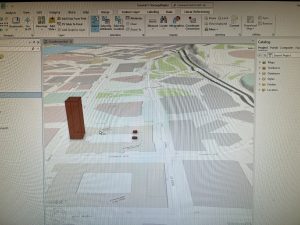
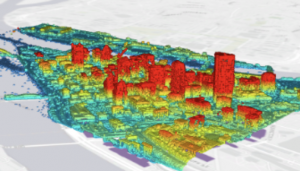
    In urban planning, GIS supports the development of smart cities by helping planners analyze land use, infrastructure, and population density. For instance, GIS can optimize public transportation routes, map energy consumption, or assess areas prone to flooding. These tools enable planners to make data-driven decisions that enhance the quality of life in urban areas.

Source: GIS Geography – GIS in Urban Planning