Koob Week 1

Hi, Im Jenny Koob! I am a freshman at OWU, and I am planning on majoring in Environmental Science and Botany, with a potential minor in Geography! I’m fascinated by how our ecosystems work and learning more about climate change, as well as the impact humans have on our ecosystems. Aside from my major, I really enjoy being outdoors, traveling, listening to music, playing guitar, and spending a lot of time with my friends.

Schuurman ch. 1 reflection

Before reading this chapter, I didn’t have much idea about the details of GIS. I knew I would figure it out soon enough within this course, but to have it laid out in a chapter actually really helped me grasp it. All of the examples of the usefulness of GIS were already quite intriguing, but to learn that even Starbucks (my literal job) also uses it shocked me! There are so many careers that find GIS so helpful to their work, its actually pretty encouraging. The more I learn about it, the more it makes sense on how it is integrated into so many parts of our world.

It also discusses the statistical side of it, and what questions people have to ask from all angles to work with the computers correctly while getting the data they want out of it. Spatial analysis is considered a completely separate thing from mapping, which is interesting. The development of ESRI was also neat to read about, especially as an envs major. This part: “Although some human geographers claim that CIS is a direct descendant of the quantitative revolution, CIS researchers are loath to accept this simplistic genealogy.” was, again, so shocking to me. I had no idea about all the discourse and opposition geographers faced with the newfound tech. Even if GIS is revered by many, I didn’t expect it to be seen as something to not accept.

As the reading goes on, it talks about how we as people interpret and perceive information, and notes that a majority of scientists argue that people “reason” through imagery. Which is very true in our society; you can see this everywhere: from grocery stores putting imagery of foods and items for buyers to easily interpret, to our road signs, to the way we even learn the alphabet. As a society, we use visuals to absorb and learn information, and I think this is a really intriguing part to note. Plus, I like the topic of “fuzzy lines” because it shows how unrealistic it is to put everything in boundaries and lines (as much as it helps GIS). As the reading wraps up, the distinction between GISystems and GIScience is very confusing, honestly, and I hope I learn more about it.

GIS applications– Coral reefs and the Redwoods

The first application I found with GIS was with the mapping of coral reefs. GIS helps scientists map, monitor, and analyze coral reef ecosystems by combining spatial data from satellites, drones, and field surveys to track changes over time. As climate change, warming ocean temperatures and ocean acidification continues, so does coral bleaching and habitat loss. GIS visualization shows spatial patterns of reef distribution and associated threats like thermal stress or human impacts.

https://cdn.cosmicjs.com/efd06f00-c3ba-11eb-b193-5346a49faa02-Mapping-regions.png

The second application I was able to find was with California’s Redwoods.

GIS is used to map, monitor, and conserve redwood forests, especially along the California coast where the coast redwoods grow. By combining satellite imagery, elevation data, climate layers, and land-use information, GIS helps scientists understand where redwoods exist today, where they existed historically, and where they may survive in the future under climate change. I was actually lucky enough to have seen the Sequoia National Park last year, and hike through the forest of Redwoods. It was truly such an amazing experience, and I am very passionate about what I can do to help protect these trees.

Esri ArcWatch October 2010 - Conserving Earth's Gentle Giants

I also completed Quiz 1! 🙂

Moore Week 1

Intro: Hello, my name is Alayna Moore. I’m a Sophomore, and I transferred to OWU at the end of my freshman year.  Delaware Ohio is my hometown, so I always wanted to go to OWU. I plan on double-majoring in Biology (B.A) and Environmental Science (B.A). As for a career, I want to spend time in the field doing surveying. I’m interested in working as an environmental consultant or working for a national park. I also have a deep interest in fungi and have written many amateur scientific papers about them. I’m very new to GIS, but I hope it will help me succeed in these fields of work. In addition to this, I enjoy knitting clothing and doing graphic design when I have the spare time.

Chapter Reflection: After reading the GIS textbook chapter, I learnt a lot of new and interesting information that I was previously confused about. I was largely unfamiliar with the concept of GIS as a whole. I knew it involved mapping and was used in the environmental science field, but that was the extent of my knowledge. Through reading the chapter, I learned that GIS can be applied to various fields and topics. For example, a city planner, a police officer, and a research scientist may all use GIS within their work for different purposes. As a result, GIS can have a massive effect on our societal function from its pervasiveness across multiple important disciplines. I also learned that Spacial analysis is one of the core functions of GIS. Spatial analysis represents more than just geographical data in a visual form, as seen with basic maps. It allows us to gain knowledgeable insights on the data being explored through using a Geographic Information System (GIS) as a tool.  One part of the chapter I found interesting was when early forms of geographic information systems were being discussed, specifically the formation of the Canada Geographical Information System (CGIS). This was one of the earliest operational computer cartography systems as it was created in the 1960’s. I found it interesting because it was created out of a want to gather data on the Canadian forests for the purpose of land management by overlaying the land data with other relevant structures like soil layers and urban areas. This was a wanted concept because this creation would allow for analysis of large amounts of data to determine how one might efficiently manage Canadas forests. As someone who is interested in the surveying and management of land as a potential career path, it was insightful to learn that one of the earliest computer cartography systems was created for that express purpose.

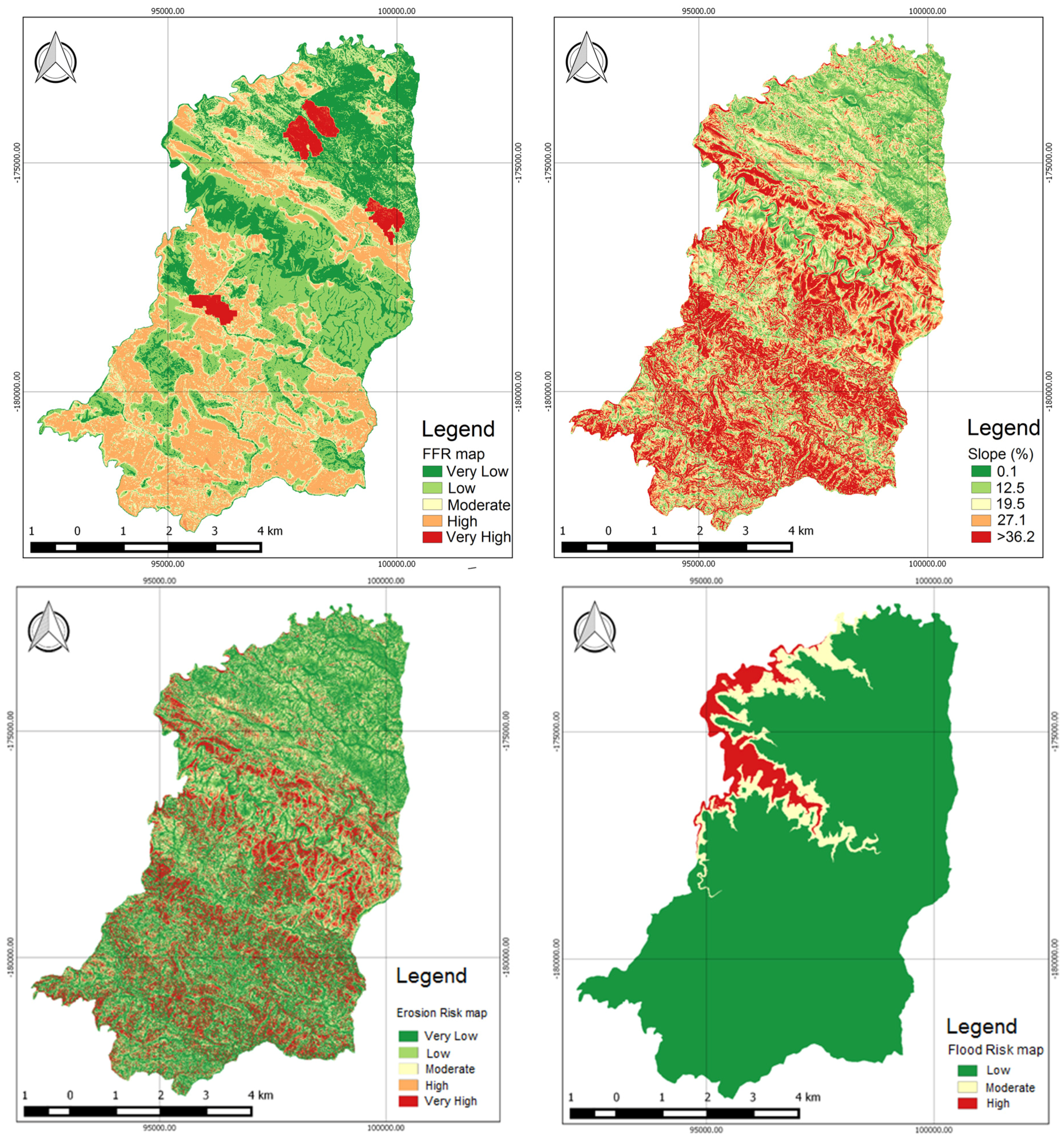
GIS Applications 1:  As previously mentioned, I am deeply interested in fungi and their environments. This led me to discover a scientific report on the topic of mapping soil fungi within a specific region. The researchers decided on mapping the fungi species located in Wielka Żuława island in northern Poland in order to provide a baseline for a new approach towards mapping landscape-scale fungi distribution patterns. The researchers succeeded in their venture of depicting large-scale landscape mapping of the distribution of specific soil fungi within the region, as depicted below.

Source 1:  https://doi.org/10.1038/s41598-023-37538-7

GIS Applications 2: Another topic I am interested in is Invasive species. I find their rippling impacts they have on the environments they are introduced to extremely interesting. Because of this interest, I found a paper published by the U.S. Department of Agriculture relating to the control of a invasive plant species. More specifically, the paper highlights the potential of handled GIS technology in monitoring the control of the species. The paper acknowledges that within Arizona, there are many different invasive species of weed that are impacting the function of Arizonas ecosystems. One solution that is highlighted is implementing the use of handled GIS systems for landowners and managers within Arizona to operate, allowing them to gather and plot data on the invasive weeds. This ability to digitally gather data may allow for more efficient and accurate information on the location and spread of the invasive weed.

Source 2: https://www.fs.usda.gov/rm/pubs/rmrs_p036/rmrs_p036_298_301.pdf

Njoroge Week 1

Introduction: 

Name: Ariana Njoroge

Hometown: Nairobi, Kenya

Major: Environmental Studies

Minor: Psychology

Interests: Drawing,  Reading, Photography, Music, Dance, Crochet, Psychology


Schuurman Chpt. 1:

Schuurman ch.1 covers the basics and origins of GIS (Geographic Information Systems)  as a science and a discipline, and talks about how it has become so prevalent in the daily lives of millions of people world wide. From GPS to disease control, GIS is used in hundreds of fields, from commercial/industrial to agricultural work. I find this interesting because it means that based on the nature of the issue you’re dealing with using GIS, it influences the way GIS can be defined.  GIS at its core is concerned with data input, analysis, mapping and output of spatial data. The origins of the concept of GIS can be traced back to researcher Ian McHarg, a landscape architect, wanted to examine the effects of the construction of a new highway on a suburban area. To accomplish this he placed multiple pieces of tracing paper on a light table, using each piece to represent a layer. This was one of the earliest development stages of GIS; the use of tracing paper to represent layers is a metaphor of the overlay function.

Two of the main concepts of GIS is the analysis and display of spatial data. However, technology did not develop enough to accomplish this until the early 1960s by researchers in the US. The combination of aerial photography and the development of computer systems that could categorize land zones into layers (eg. wildlife, recreational areas) created the foundation for future GIS technology to build from. In the 1980s, a more efficient method of computerized overlay came to be. This involved the utilization of polygonal/vector boundaries, and added an entirely new dimension to how GIS could be utilized in a more user-friendly way. Visualization can help us give data meaning, and the development of polygonal imagery allowed geographers to see and understand spatial patterns in any given region. This allows GIS programs to be utilized in a multitude of differing fields, and is exactly what makes it so interesting as a discipline. It has come a very long way over the decades and will slowly but surely become one of the most vital technologies in the modern day. Overall I thought the chapter was a great introduction into GIS. I found it’s origins very intriguing, and look forward to see how I learn to interpret and use GIS through this course.


GIS Applications

1. Agriculture: GIS provides accurate, comprehensive data that aids decision making and planning. An example of this would be sensors placed in the soil that record temperature and moisture levels to ensure crop health.  It can help farmers determine whether some crops will grow better than others in certain seasons, or determining how climate changes could affect crop health. This can be especially helpful for smaller-scale farmers who are particularly vulnerable to climate issues. 

2. Enterprise decision-making: GIS software enables companies to make decisions regarding customer segmentation, real estate management, as well as transport and delivery management. GIS also allows companies to secure and allocate resources, as well as ensure efficient field service management. This will allow business operations to run smoothly, in that customer issues and complaints can be resolved. In the long run, it reduces downtime and costs while increasing customer satisfaction.


Applications of (GIS) Geoinformatics in Agriculture - GeoPard Agriculture

Source:

Mathenge, M., Sonneveld, B. G. J. S., & Broerse, J. E. W. (2022). Application of GIS in Agriculture in Promoting Evidence-Informed Decision Making for Improving Agriculture Sustainability: A Systematic Review. Sustainability, 14(16), 9974. https://doi.org/10.3390/su14169974


Rhoades Week 1

1. Introduction: My name is Hunter Rhoades and I am a Junior majoring in Public Health, Nutrition, SOAN, and Educational Studies with a minor in Biology. As an aspiring epidemiologist, I figured that this course would be great to take – as GIS is often applied to outbreak investigations to identify disease clusters. I am from Zanesville, Ohio which is home to the infamous Y Bridge and Tom’s Ice cream Bowl. Moreover, I’m an RA on campus, a Cooking Matters Coordinator, and involved in our university’s Food Recovery Network. I look forward to see how I can utilize GIS and apply it to the field of public health/epidemiology!

2. Schuurman Chapter 1: I find it really interesting that GIS is being utilized for areas other than geography. For example, I have seen GIS being utilized by Registered Sanitarians at fairgrounds to map which food trucks have passed inspection, failed inspection, or have yet to be inspected. I find the linkage between GIS and public health to be very interesting, as the application allows for quicker visualizations and saves time. I was interested to read about how GIS allows planners to identify residential, industrial, and commercial zones by mapping the exact location and survey coordinations of each taxable property. This allows planners to see impacts on a larger scale in a way that may be hard to do via data analyses or groundwork.

I was very interested in reading about the differences between spatial analysis and mapping, because I have always thought that the two were interchangeable. I learned that spatial analysis generates more information or knowledge than can be gleaned from maps or data alone. On the other hand, mapping represents geographical data with varying degrees of fidelity, in a visual form. It does not create more information than was originally provided, but does provide a means for the brain to discern patterns. To my understanding, spatial analysis is analysis on a deeper level beyond visuals, while mapping just provides visuals.

I was very interested to read about how John Snow utilized mapping during the 1854 Cholera outbreak. This example emphasizes the importance of mapping, as the author states that 50% of the brain’s neurons are used for visual intelligence. Visualization in conjunction with analysis can be a power method to discover outbreak clusters– in other words, visuals can tell stories that allow for researchers/analysts to uncover data/key details about the visual. I believe that the evolution of GIS is essential to uncover trends in data more quickly and precisely.

3. GIS Application 1: SARS Cases Distribution in the World

This source discusses the evolution of the application of GIS within Health and Human Services. During the SARS outbreak of 2003, WHO and Hong Kong Department of Health launched an interactive website mapping application to provide current, accurate information on the distribution of SARS in China and surrounding areas. These mapping efforts educated the public and travelers, assisted public health authorities in analyzing the spatial and temporal trends and patterns of SARS, and helped authorities assess and revise control measures.

Source: https://pmc.ncbi.nlm.nih.gov/articles/PMC7121355/

Fig. 29.4

4. GIS Application 2: Emergency Department Usage

This source discusses how the percentage of emergency department visits change from 2010 to 2012 via zip code. This data was created via Wake County’s (North Carolina) Community Health Needs Assessment (CHNA). This visualization allows for public health officials to understand where need is within the community, and implement proper interventions.

Percent Change in Emergency Department Usage by Zip Code, Wake County Community Health Needs Assessment, North Carolina, 2007-2011

Source: https://sph.unc.edu/nciph/gis/

5: GEOG291 Quiz was completed.

Deem week 1

I have completed the GEOG 291 quiz

Hello! My name is Andrew Deem and I am a freshman at OWU this year. I am from Marion, Ohio which is about a 30 minute drive from campus. I plan to major in botany with a minor in environmental studies because I love plants and the outdoors. I am looking forward to participating in this class and learning more about geography!

Schuurman: This chapter of the book was useful to me for several reasons. Because this is a topic I know very little/no information about, this chapter was able to bring me up to speed on the entire landscape surrounding GIS with a brief summary of its history and how it was gradually developed and accepted in the mapping community. There were times when I was reading that I would be struck with a lot of jargon from this topic that meant little to me, but the author does a good job at providing enough context clues so that an inexperienced reader is able to discern the information anyways. Additionally, I found it interesting how the story of the development of GIS was being told in a way that directly linked it to advancements in computing technology, which made it easier to follow the timeline of events. From this chapter I was also able to gain a greater understanding of how GIS is useful in displaying data in the form of visual information, making it easier to understand. I can appreciate how valuable GIS must be, because I personally see the maps it creates often on the internet. Overall, this chapter taught me about how complicated GIS can be, both GISystems and GIScience are very complex fields which are very important parts of our society and have taken a lot of effort and time to get to the point they are at today. Much of the complexity comes from just how broad this subject is, as while it is foremost a field that specializes in creating maps, it is easily overlooked that ‘creating maps’ in this way requires knowledge on the topic the map is being based on. Because of this, GIS is a highly valuable field that is important to modern life.

GIS application 1: https://experience.arcgis.com/experience/6933ac08a46d43a0a36372cba29299f1


For my first GIS application, I was able to find a map of edible plants that can be foraged across Ohio, and interestingly enough it was on ArcGIS Online. This directly ties in with my interests of native plant taxonomy and foraging.


GIS application 2: https://tacf.org/american-chestnut-range-map/

For my second application of GIS I decided  to find a map displaying the native range of the American chestnut tree, which has been destroyed by an invasive fungus over the past century.

Gist Week 1

Introduction: Hello, my name is Reghan Gist! I am a freshman from Delaware, Ohio and am planning on double majoring in Environmental Science and Zoology. With this degree I would love to do some sort of fieldwork with animals, I love animals and have 4 pets back home! I am also a part of the cross country and track team here at OWU. I am new to GIS, but I am very excited to learn what I can create and do with the software.

Chapter Reflection: The first thing that caught my attention reading this was the explanation of how GIS has experienced a boom of popularity and is used in a variety of different fields. When learning about this class I did not realize how many other non geography related career paths, including Starbucks, would also use this technology. I assumed GIS was used solely for graphing environment related data, which is very wrong after reading. I found it very refreshing to hear that the software is considered confusing because of how different people see it differently. I enjoyed reading about how each person can utilize GIS in a way that best fits their needs and interests. This chapter provided so many examples of what GIS has or could be used for and shows that the opportunities are endless, which can explain why so many are drawn to the technology. I especially was interested in how GIS is affecting our lives even if we do not notice it. Oftentimes I, and presumably others, want something to have a clear and correct identity, however because this chapter provided lots of examples of uses this helped me understand it better. I especially liked the part of the chapter where it explains how GIS impacts society through shaping decisions that affect our lives. Of these impacts, the one that interested me the most was how GIS created crime maps that were able to stigmatize neighborhoods and hazard maps that pointed environmental pollution to be mainly in low-income communities. Overall, through Schuurman’s emphasis on GIS being more than just a software tool and having much larger impacts, I was able to gain a better understanding, learn examples of where it is found in everyday life, and be much more interested in the class and having the opportunity to gain my own experience working with GIS.

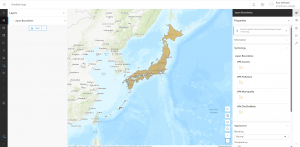
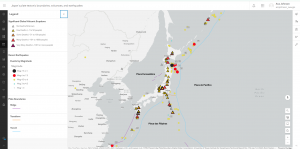
GIS Applications (1): Marine Life: One of my interests within the environmental science field is marine life and oceans. I was curious how GIS could be used to gather information on specific marine species and their habitats. Through this search I found an article titled “Using GIS to Analyze Animal Movements in the Marine Environment” (https://www.researchgate.net/profile/Jerald-Ault/publication/249994071_Spatial_modeling_of_fish_habitat_in_Florida/links/00b7d51e967547ab22000000/Spatial-modeling-of-fish-habitat-in-Florida.pdf#page=47) This article provided lots of useful information and graphs on spatial processes and management of marine populations. Specifically, it focused on tracking certain marine animals. The graph inserted below was one of the specific trackings done in this article that focused on the Halibut, a very odd looking fish I had never heard about. It was done in Glacier Bay, Alaska and found a significant amount of the Halibut locations were close to the Rocky reef compared to being in random locations. 

GIS Applications (2): Wildfires: Due to my sister being in California during one of the widespread wildfires, I was very interested in how GIS could or has been used to track these wildfires and provide the graphs and information that we watched on the news while she was there. I found this article (https://www.proquest.com/docview/2179993356?pq-origsite=gscholar&fromopenview=true&sourcetype=Dissertations%20&%20Theses) that focused specifically on tracking wildfires in Santa Barbara that pose threats to the citizens in the area. The student created a web map using local data that allows residents to monitor the evacuation potential, fire size, and emergency updates. This provided a resource to the public to ensure they have access to live information regarding current and past wildfires. There were no graphs provided with the article, however I found it to be extremely interesting and a great way to utilize GIS that could help protect local residents. 

I completed the GEOG 291 quiz!

Mason week 1

My name is Natalia Mason, and I am a freshman studying Zoology (B.S) and Environmental Science (B.A) at Ohio Wesleyan University. I am very passionate about Entomology, Zoology, and Environmentalism. As for my career, I aspire to become an international wildlife biologist, with a specialization in Entomology, so I can make a positive contribution to preserving the ecosystems and species of our planet. Furthermore, I also aim to become a professional author and painter, so that I can use my skills to contribute to the environmentalism movement. I also really enjoy talking about insects and other types of arthropods!

Schurmann Reading:

GIS is integrated into many more real-world data analyses than I had previously thought, although, after learning about it, I have grown to see how critical it can be. Going into this class, I knew of ArcGIS as just a mapping platform; however, the reading had allowed me to see the variety of uses that the mapping platform can be used for among professionals, and I found the description of it being a “scientific approach to a problem” (Schurmann 2) very compelling.  It has also made the purpose of GIS clearer by creating a distinction between mapping and spatial analysis.

The article made a frequent point on the uses of spatial analysis in the environmental realm of research, which helped me to contextualize the importance of this application in my field of Zoology. I had seen many distribution maps regarding animals and plants; however, I did not frequently consider the methods that went into creating those visualizations of data. I am realizing that GIS mapping techniques are presumably much more common than I would have thought before.

A point was made that GIS has many roots in older cartography, while conforming into a modern-day digital format that gives the field an opportunity to grow and expand in new ways. It was interesting to learn that the true roots of GIS are harder to gain a definitive understanding of, as it seems pretty fitting for the platform, considering the fact that the range of uses the application has is not static or clear-cut either. The visual aspect of data quantification was made very apparent by the author, which I find to be very important, as it allows professionals to map complex data in ways that can be understood by the public, even when that data is not perfectly clear.

GIS Applications:

The GIS application I found was a Canadian Database that utilized GIS to map the distribution of Mayflies around different watersheds in Canada, as well as a portion of Maine. The Data trends show that mayflies do not venture very far from watersheds. Because they are a species with an aquatic larval stage and a short adult lifespan, they have to stay near waterways to lay their eggs in a short amount of time.

Source: https://experience.arcgis.com/experience/564d07a04cf6472fb367c702ffe3f4d9/page/Main-Page

My secondary GIS application that I had found was a source covering the occurrence of the first stable population of the invasive Indochina Mantis in Italy. The Researchers covering the article had utilized a platform of ArcGIS to map the localizations of the Mantis populations. An interesting aspect of this study looked at railways and how Mantises are likely being transported along the railway to other urban areas across Italy. This data also gives insight into the hardiness of Indochina Mantises within urban landscapes.

Source: https://bdj.pensoft.net/article/50779/

-I have completed the introductory quiz!

Ramirez Week 1

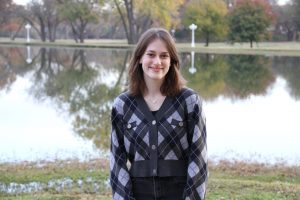
Personal: I am Natalia Ramirez, a commuter student from Columbus and a freshman at OWU. I am most likely majoring in Environmental Studies & Pre-law. As of right now, I plan to become an environmental lawyer to help improve the environment. I am new to GIS but I hope that it will help me improve my technology skills and my understanding of human impacts on the environment. 

(I usually don’t wear glasses, but I was on a long flight)

Comments on Reading: After reading chapter 1 of the GIS textbook, I realized that there are many layers when it comes to GIScience and GISystems. Before reading, I only believed this system was only used by geographers to study rising sea levels or landscapes in general. It was interesting to learn how GIS is used by everyone. Such as a person using a GPS system to a business corporation analyzing its most popular location. While this is a useful tool, the chapter also mentioned the concern there is for GISystems since the data may be easy to misuse or misinterpret. Which is alarming since many common folk and scientists use this technology. 

Throughout the chapter the main concern about GIS systems was finding an effective way to interpret the data. Mostly because there could be multiple ways to interpret it since the system may note the variable differently depending on the location. In my opinion, would it not be possible to create a system that could interpret the GIS results? Or would it create other questions? It may reduce other problems such as figuring out symbols needed to represent the spatial platform, or the best units for a GISystem.

Additionally, because GIS has various interpretations depending on locations, different countries may adapt it according to their geography. As the chapter mentions, Canada’s GIS compared to the UK or the US is different because of the developers, and geography. Nonetheless, the new GIS system may include everyone. Especially since the chapter mentioned how politicians need to analyze some areas to determine who receives benefits. After reading the chapter, I realized that there is much more to GIScience than what one would normally believe. I made connections to  other topics such as philosophy, feminism, history, and art to help me understand the basis of GIS. 

GIS Application: I personally have many interests but for the exploration I decided to do one in waste reduction and the other with polar bears. For the first source, I found an article that explains how to reduce waste in suburban areas. In this study, the researchers used GIS to track municipal waste and created effective management techniques to reduce it. On the contrary, they would analyze what waste management method was working if an area had low waste. This image explains the methodology used since there was no GIS map:

Source: GIS Municipal Waste Management 

The second article used GIS to track polar bears in the Canadian Arctic in order to study their whereabouts as the Arctic is changing. The researchers specifically tracked where polar bear dens were and whether or not more conservation supplies should be enhanced. This form of GIS is important in order to conserve specialist species such as polar bears. This image is a GIS map of polar bears:

Source: GIS Polar Bear Den Tracking 

Quiz: I have competed the quiz.

Ogrodowski Week 1

My name is Lily Ogrodowski, and I am a first-year student from Toledo, Ohio. I’m planning on an environmental major (not sure which one yet!), but I’m also pursuing studies in Chemistry. I may also pick up Sociology/Anthropology, or even Public Health. I have a particular interest in the study of freshwater and lakes/limnology, as well as human geography issues like populations, land use, and urban planning.

Schurmann Ch. 1

In my first week of this class, I completed the introductory quiz which reinforced directives on the syllabus. Then, I read Schurmann Chapter 1, Introducing the Identities of GIS. This introductory chapter has given me a solid introduction to GIS and its uses, history, and impacts. I’ve learned that GIS is more than just digital maps—it emphasizes spatial analysis techniques. While mapping “shows” land features, it seems like applying spatial analysis takes that data and “tells” about patterns the data may reveal. With GIS, spatial analysis can be done while combining many different data sets and maps, proving that GIS is ultimately an interdisciplinary tool with uses that extend far beyond geography alone.

A main focus of the chapter is the comparing and contrasting of the two definitions of GIS: Geographic Information Systems and Geographic Information Science. The author defines GISystems as the mapping and analysis methods coded into GIS programs, while GIScience is the research and theory going on behind the scenes. GISystems are generally accepted and used, while GIScience is the ongoing research and theory development that asks questions about these systems and how they apply in different areas. GISystems are the tools, while GIScience involves taking the tools and tinkering with them.

Additionally, GIScience is most impactful when specific local knowledge is taken into consideration. In the chapter’s example of public wells being linked to cholera cases, a specific understanding of the location of focus inspires a most efficient use of GISystems, thanks to GIScience. However, because GISystems are formulated by people, that means they will inevitably have bias or limited perspectives. The chapter concludes by describing a main goal of future GIS development as involving the integration of multiple ontologies, or conceptual systems of thinking and organization within GIS.

Before reading this chapter, I don’t think I realized how prevalent GIS is in the development of our world. It makes sense that GIS models would be used in agriculture, transportation, energy, and housing, but I did not realize the extent to which GIS plans with efficiency and optimization in mind.

GIS Applications

The first GIS application I found was the Food Environment Atlas from the United States Department of Agriculture (USDA) Economic Research Services. I clicked on the Grocery data set, which shows the number of grocery stores in each county. (The darker the shade of pink means more grocery stores.) I found lots of large zones with few grocery stores or no data in the Appalachia region of Kentucky and West Virginia. (I outlined them with my computer’s Draw tool.) 

I know from research in other classes that these regions face very low income rates, and they are home to food deserts, or places with inadequate access to healthy food.

Grocery | Food Environment Atlas

Next, I found an application from the National Centers for Coastal Ocean Science (NCOOS) that forecasts harmful algal blooms in Lake Erie. I went into the archived videos to find a date with high levels of algal blooms and settled on July 25, 2023. This application is a good example of how overlaying different data sets, like cyanobacterial density and wind patterns, is what makes GIS helpful when explaining the reasons for the trends we see. 

Bloom Position Forecast – NCCOS – National Centers for Coastal Ocean Science

Downing Week 1

  1. Introduction: My name is McKenna Downing, and I am a senior who is majoring in Zoology and minoring in Environmental Science. I am from Pleasant Hill, Ohio, which is 30 minutes north of Dayton. I am on the cross country and track and field teams as a distance runner. After graduation, I plan to find a job in wildlife rehabilitation and environmental education at a nature center (preferably somewhere warmer than Ohio). I am new to GIS but very interested in how it can affect many areas of science, especially in terms of deforestation and land loss.
  2. Schuurman Chapter 1: Nadine Schuurman begins Chapter 1 by illustrating GIS as a large system, not a specific tool with a fixed or secure identity. Different companies or organizations use GIS for their specific jobs, and do not consider what others use it for. GIS dates back to the 1960s, when pieces of paper were layered on top of each other in order to find the best route for a highway. I think that’s really interesting because a problem that seemed difficult was made easy using a form of GIS. There were many people who were involved in the technology of GIS, such as Roger Tomlinson and Lee Pratt, who created the first computer cartography system to create a map of an area featuring all geographic features. I think that it is also interesting that GIS came around when it did, when information was being translated into technological terms and being distributed that way. The main way Schuurman tells us GIS was used in the early stages was to map data distributions, particularly within the environment. It makes me curious if these people would know how much of an effect it would have on the future! She then goes on to discuss how some GIS researchers perceive the system as a way to increase accessibility for spatial analysis. I think that’s really cool because there are so many professions in the world that can benefit from using this system. I also love the idea of GIScience and GIScientists. The classification of spatial entities can be difficult, because people can easily disagree on these parts. An example of this that Schuurman mentions is how to define where a mountain stops and the foothills begin. And it’s so cool that John Snow was able to use the concepts of GIS to figure out the cholera outbreak! I really liked how this chapter discussed how we use GIS in our daily lives, mostly without even realizing it. So many people use this system in different ways, and Schuurman wrote and described it very well.
  3. GIS Applications (1): Wildlife Migration: Understanding the migration of wildlife is incredibly important, and this research paper focused on how scientists used GIS mapping techniques to track the migration of wildebeest across the Serengeti-Mara habitat. The research included the mean routes of the wildebeest across the landscape and the amount of green space before and after the wildebeest had come through. The results found that the less green space in an area before the wildebeest arrived, the less likely they were to travel through that area because of the lack of water. Source: Musiega, D.E. and Kazadi, S.-N. (2004), Simulating the East African wildebeest migration patterns using GIS and remote sensing. African Journal of Ecology, 42: 355-362. https://doi.org/10.1111/j.1365-2028.2004.00538.x
  4. GIS Applications (2): Plant Conservation: This research paper focused on using GIS methods in order to implement plant restoration programs in Portugal. They focused on bryophytes and how they grew within a natural reserve with different species of vegetation, including alien species of plants, and varying levels of altitude. The researchers collected information from the reserve using aerial GIS mapping. it was found that the bryophytes all had differing levels of need within the reserve, with some doing well at altitude and others not. The alien species (invasives), also played a part, because they would grow quickly and outcompete the endangered bryophytes. GIS was helpful in finding these results, and is demonstrated in the map below. Source: https://www.sciencedirect.com/science/article/pii/S0006320703001253
  5. I completed the GEOG 291 Quiz!