
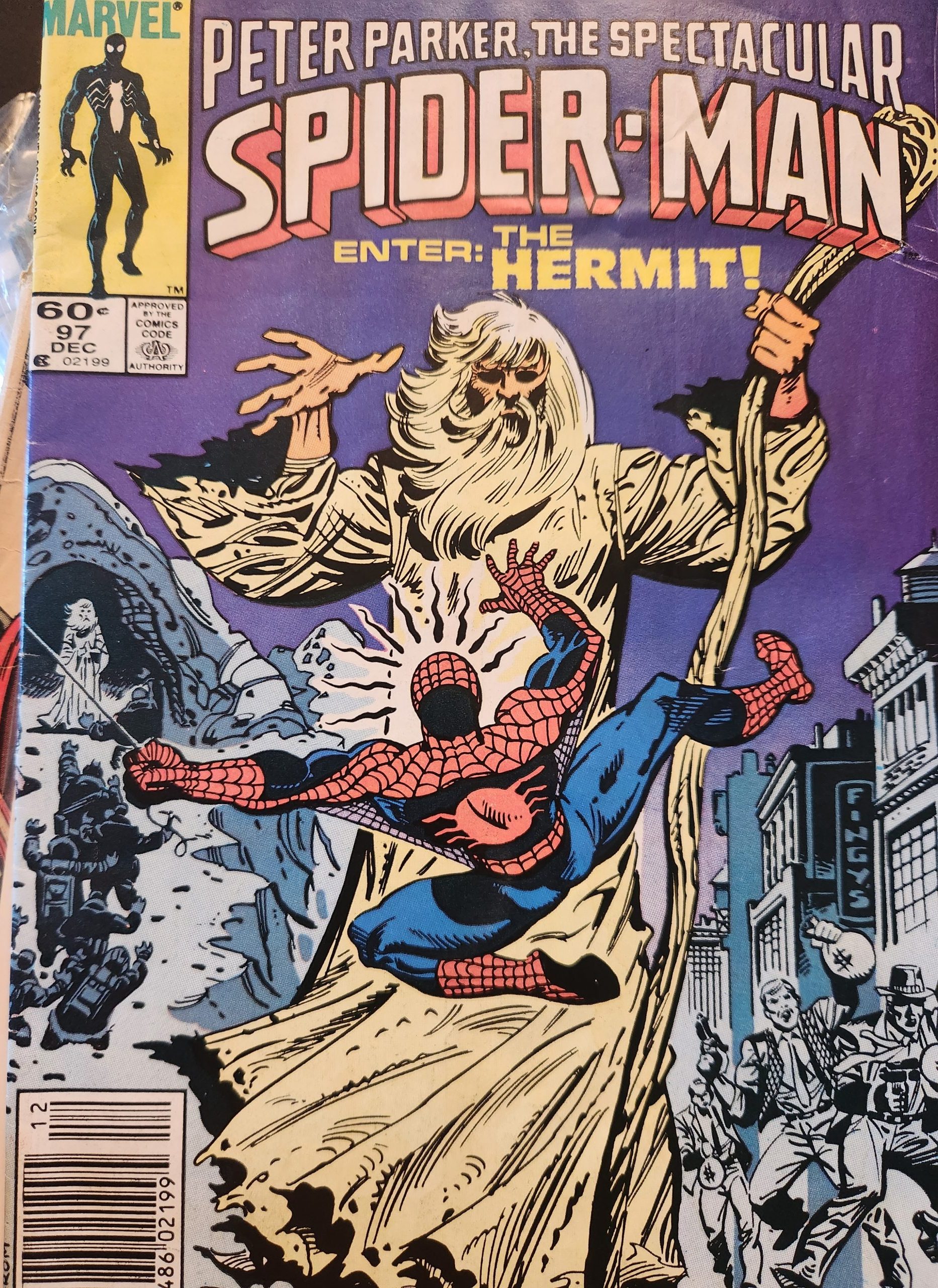
In part three of this four-part series on some great things that I love about Bronze Age comics, we will focus on the philosophical and mythological influences that helped give birth to many of the beloved comic book superheroes we still love today. There are so many fictional characters, especially comic book superheroes, that have their origins in philosophy and mythology. Superheroes also have their origins in multitudes of other aspects of human history and subjects ranging from Asian martial arts, to insects, and animals, and even constructs of society. However, I have a great interest in philosophy and some mythology so I wanted to solely explore how characters of philosophy and mythology became superheroes that young people could engage with, see themselves in, and love.
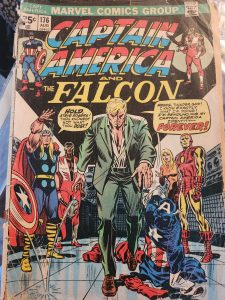
Thor (at left) in “Captain America Must Die!” Captain America and the Falcon. Marvel Comics. 1974.
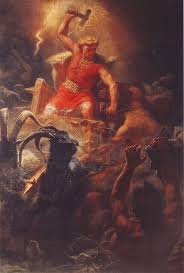
Thor of Norse mythology. “Thor Battle Against Jӧtnar” (1872) by Mårten Eskil Winge. PICRYL.
Thor is the god of thunder from Norse mythology. He is shown on the cover here of another issue of Captain America and the Falcon. In this issue, members of the Avengers have to help Steve Rogers (Captain America) regain his desire to become Captain America again as he is haunted by villains he has fought in the past, and the lack of public support for him. The supporting characters of Thor’s world such as his brother Loki, who is a Norse villain, and his father Odin are all Norse gods. Marvel’s comic book rendition of Thor dawns a costume of bright reds, blues and yellows, he also has an extremely muscular psyche, as is typical with comic book superheroes. Thor is an example of Marvel comic book writers transporting Norse gods into anthropomorphized superheroes that many people can connect to. It is further clear that they attempted to align and mimic many of the aspects of Thor’s origins in Norse mythology with their superhero reimagining with Thor’s relatives, his iconic hammer, blonde flowing locks, and his manner of speech.
Marvel Comics Group. “Hermit-age!” Peter Parker, the Spectacular Spiderman. 1984.
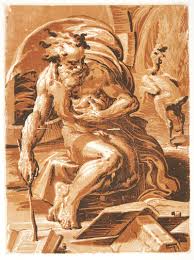
Hermit of Greek mythology. Rawpixel.
Next, in an issue of Peter Parker, the Spectacular Spiderman “Hermitage,” Spiderman is fighting against a misunderstood man who chooses to hide away from society and live life as a hermit. This hermit is not a recurring villain of the Spiderman universe as the hermit returns to life as a “normal” man in modern society by the end of this comic. Hermits originated from Greek philosophy and religion, and can refer to a person living in solitude. They typically symbolize isolation, and the pursuit of truth and knowledge.
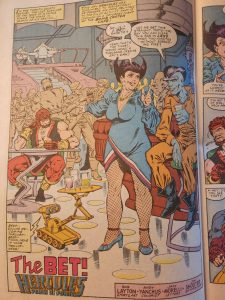
Hercules in “Night of the Dragon,” The Sensational Spiderman. Marvel Comics, 1971.
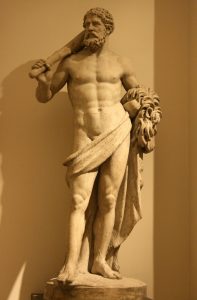
Hercules of Greek mythology. Wikipedia Commons.
One more example of mythology influencing the creation of comic book superheroes is Marvel’s interpretation of Hercules. (Another perhaps more popular version of this hero is Disney’s Hercules animated film.) Anyway, According to Greek and Roman mythology, Hercules is a demigod, the son of Zeus and a mortal woman. Marvel’s Hercules Prince of Power appears briefly as a bonus story at the end of The Sensational Spiderman featuring Spiderman, Steel Serpent, Iron Fist, and Misty Knight. This Hercules lives in an intergalactic world composed of aliens. His world is very goofy, and full of a variety of bright, fun colors, which is a sharp break from the dark themes that composed much of the Bronze Age of comics.