

Paul Dean on Class and Connection
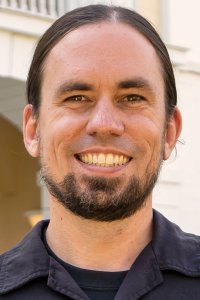
Paul Dean
Professor in the Department of Sociology & Anthropology; Department Chair
By Sasha Fahd ‘28
After being asked about the everyday moments behind his recent faculty award, Dr. Paul Dean describes helping a student find the confidence to raise their hand in class.
Those conversations help him learn to understand his students’ struggles and help them find a way forward. Having entered college as a working-class first-generation student himself, Dean remembers how much it mattered to have someone in his corner.
Professor of Sociology at Ohio Wesleyan University, Paul Dean, received the 2026 Bishop Herbert Welch Award for Scholarly or Artistic Achievement. His research focuses on inequality and the lives of working-class first-generation students. This includes his book, Class Cultures and Social Mobility: The Hidden Strengths of Working-Class First-Generation Graduates. His work brings up a question for faculty: How does social class affect the way we expect things to be? How does it shape our connections with students?
“When I think about how I can work with students and help them feel a greater sense of belonging and [feeling] more at home here at OWU, which I struggled with as a student, that’s really what it’s about,” Dean said.
That link between his life and his scholarship became especially clear during a research trip to Denmark with working-class first-generation students. Traveling together opened up talks about growing up with little money and figuring out where they fit at OWU. They shared their hardships, but also the parts of their backgrounds they were proud of.
Dean wants that pride to remain part of discussions about first-generation success. He appreciates the community that has formed around working-class first-generation identity, while also recognizing that an emphasis on individual upward mobility can leave less room to discuss people’s connections to their working-class communities.
“I’d love for us to kind of think more about what it means to maintain the roots to where we’re from and to have pride in where we’re from,” he said.
His own college decisions were shaped by the economic insecurity he hoped an education would help him escape. He began at community college as a business major, seeing a practical route to a good job. Sociology soon caught his attention, giving him a way to understand his experiences through the social systems he was studying. Still, changing direction took time.
“It took me probably a couple years to get past this hump of, well, what would I do with a degree in sociology?” Dean says.
During his college years, a sociology professor encouraged him to travel abroad. He backpacked through Europe with his friends on a tight budget, which gave him space to reconsider what he wanted from his education. “It taught me to take more risks, and to go after what I love,” he says. He began to feel more comfortable pursuing sociology without knowing exactly where it would lead.
That uncertainty is familiar when students ask him about their own career possibilities. “And so now I, of course, have those conversations with students,” he says.
Remembering his own hesitation, Dean encourages students to explore what interests them while taking their concerns about finding a secure job seriously.
Those experiences continue to generate questions for his research. Dean is now interested in how people develop class awareness, especially in a culture that often explains success through individual effort. He wants to understand what leads people to recognize how class shapes their lives and connects them to others.
For faculty colleagues, he stresses the importance of carrying those conversations into everyday professional life. Class background can influence how an instructor speaks with students and what they expect students to understand about college. Discussing those influences can make it easier to recognize assumptions that might otherwise go unexamined.
“For faculty, class shapes how we interact with students, the language that we use,” Dean says. “And so, just to start to be mindful of that and to talk that through with people around us.”
Back at OWU, Dean hopes colleagues will bring their own stories into the conversations that his research starts.
“If we talk about [our stories] with people around us,” he says, “there’s something really cool that happens, that’s another point of connection.”