
I have a fascination with pirates that I blame primarily on Pirates of the Caribbean. Chances are, if I see a book about pirates, I’m going to pick it up. Obviously, I know on a logical level that the pirate books I’ve read (like Fable by Adrienne Young or Daughter of the Pirate King by Tricia Levenseller) aren’t exactly accurate portrayals of piracy, but since these–and many other pirate books I love and am valiantly resisting the urge to list–are young adult fantasy books, I was content not to think too hard about why. Of course, willful ignorance can only last so long when you’re as morbidly curious as me. I am not, however, a moral philosopher, so what I find more intriguing than the ethical considerations of the romanticism of pirates is the origin of the romanticism–which is owed largely to literature.
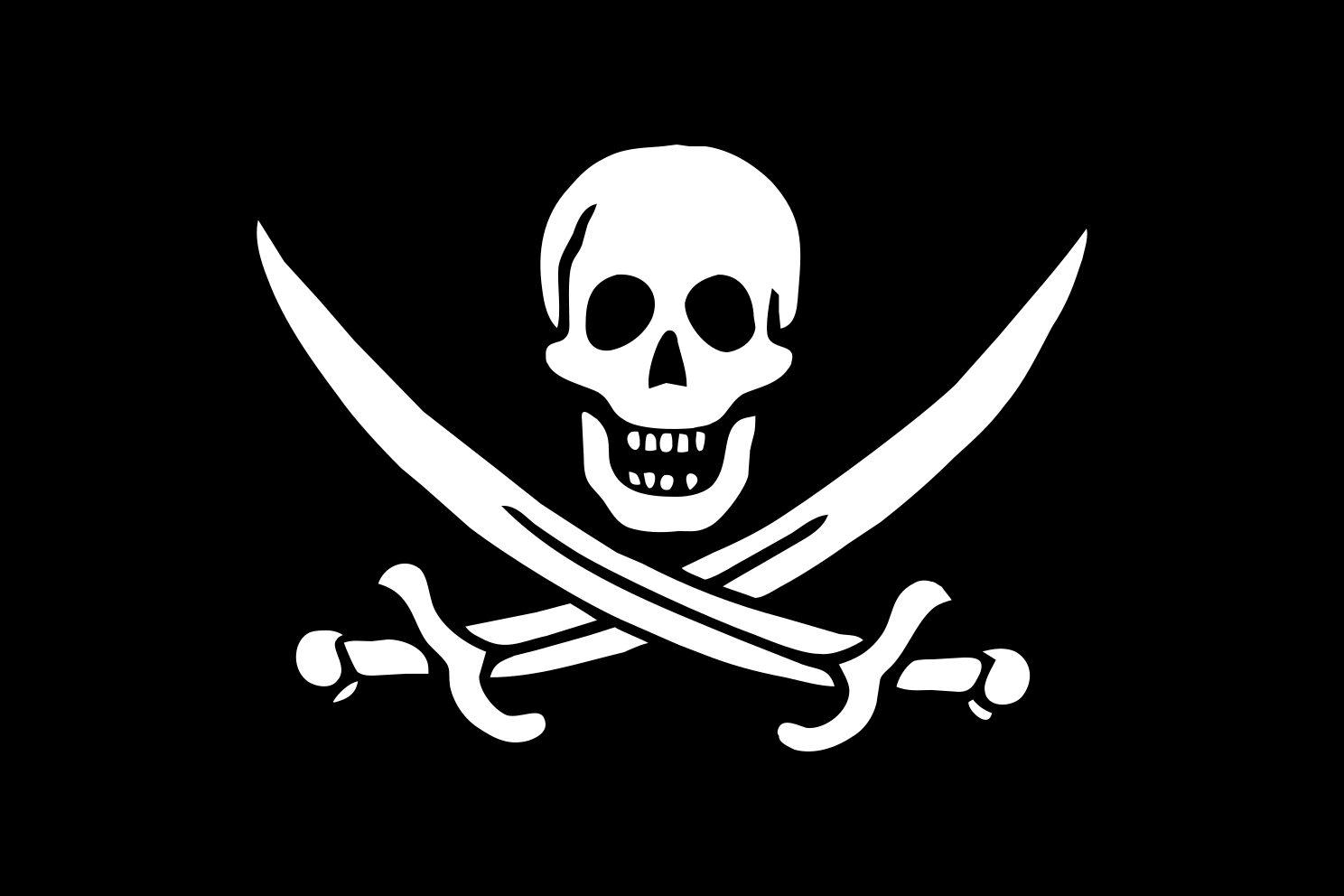
Most of the romanticized notions of piracy are rooted in its “Golden Age,” the period from the 1680s to 1720s with heightened pirate activity. The most (in)famous pirates were from this era, including Edward “Blackbeard” Teach, Captain William Kidd, “Calico” Jack Rackham, Bartholomew Roberts, Anne Bonny, and Mary Read. Most pirate activity was concentrated around the Caribbean and the North American east coast. Pirates’ main targets were ships carrying expensive cargoes, as well as ships involved in the transatlantic slave trade. News surrounding pirates was somewhat sensationalized by printers, making the already brutal acts even more violent to gain more attention and sell more copies. While not necessarily romanticized, stories of pirates were used as entertainment even during the most prominent period of pirate activity.
In 1724, A General History of the Robberies and Murders of the most notorious Pyrates, or A General History of the Pyrates, was published under the name Captain Charles Johnson. The true identity of the author is not confirmed, but some attribute the book to Daniel Defoe, author of Robinson Crusoe. Initially published in two volumes, the book shapes (for better or for worse) a lot of our modern understanding of pirates, and is the source of many common features of pirate literature, like burying treasure, missing eyes or limbs, and the name of the Jolly Roger. In the first volume of the book, Johnson writes primarily about 18th-century pirates, including each of the famous pirates I listed above, besides William Kidd, who appears in the second volume about pirates from a few decades earlier. Despite claiming to be based on trial records, news reports, and even interviews, Charles Johnson’s (whoever he may be) work is highly questionable in terms of accuracy. History professor Kevin P. McDonald wrote for the Oxford Research Encyclopedia of Asian History that A General History of the Pyrates “is not a historical primary source but a fabulous literary one.” However unreliable it may be, A General History of the Pyrates was very popular and began some of the romanticizing tendencies. Though violent, pirates were also made to be extravagant characters through colorful description and detailed illustration.
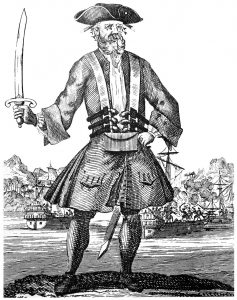
Engraved by Benjamin Cole (1695–1766), Public domain, via Wikimedia Commons
Perhaps most famously, Johnson partly inspired Robert Stevenson’s 1883 novel Treasure Island–minor character Israel Hands was even named after a pirate profiled in the first volume of the mysterious work. Katherine Waite of the British Online Archives credits Treasure Island, and its lessening of pirate villainy for the sake of being more suitable for a younger audience, as a major factor in the ongoing romanticism of pirates. The book follows the adventures of Jim Hawins, who eventually overcomes the cunning pirate Long John Silver. Perennial tropes such as treasure maps marked with an “X” and parrot companions originated in the book. Though perhaps less brutal than actual pirates, Long John Silver’s crimes are many, including a lot of murder.
Further continuing the theme of watered down pirate crimes is Captain Hook, who first appeared in a production of J.M. Barrie’s 1904 play, Peter Pan; or, The Boy Who Wouldn’t Grow Up. We learn more about him in the 1911 novel Peter and Wendy. Though the Disney version of Captain Hook that most are probably more familiar with is less scary than the book version, there are a lot of aspects of the original Hook’s character that offset his crimes. He does attempt to murder Peter and other children (including the Lost Boys and the stereotypically represented Tiger Lily) on multiple occasions, and uses his iron hook in place of his right hand in fights. However, he also has an extreme and comical fear of crocodiles–an obsession that is based on Captain Ahab’s obsession with the whale in Moby Dick–and his own blood. In a logical world, his rivalry with Peter would be explained by the fact that Peter Pan fed his hand to the crocodile (a pretty good reason not to like someone), but the actual reason behind his animosity is that Peter gets on his nerves with his cockiness, which I find very amusing. There’s also a brief reference to Treasure Island’s Long John Silver, as Hook is apparently the only pirate that Stevenson’s villain (referred to by the pseudonym “Barbecue”) feared. Perhaps most puzzling, and to me the funniest, is the fact that Hook is a graduate of Britain’s Eton College–for my fellow Americans, the “college” part of the name doesn’t refer to a university, but to a boarding education for 13 to 18-year-old boys–and Balliol College of the University of Oxford. He constantly goes on about good and bad form and even says Eton College’s motto (Floreat Etona, or May Eaton Flourish) as his last words…that is, right before being eaten by the crocodile, whose presence is announced by the ticking of a clock it swallowed.
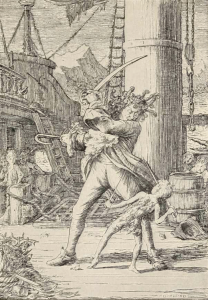
F.D. Bedford, Public domain, via Wikimedia Commons
Other than the romanticism of piracy in literature, there are several aspects of the pirate lifestyle that appeal to both historical and modern audiences, most notably their sense freedom and nonconformity. In a world made up of so much repetition, it’s no surprise that a lifestyle defined by spontaneity and adventure would be appealing. Roger Luckhurst of BBC explains the appeal via pirate codes, which “read like statements of anarchistic community, with collective decision-making, no hierarchy, elected leaders and an equal distribution of labours and profits.” In addition to literary romanticism of piracy, the adventurous and egalitarian lifestyle continues to appeal to modern audiences.
Despite the appeal of freedom, the motivations—and realities—of piracy were far less exciting (and very violent). Most pirates began their careers out of desperation; the 1710s saw a surge in pirate activity, making up part of the Golden Age, due to mass unemployment and the poverty of sailors. Contrary to its name, the Spanish War of Succession (1701-1714), a struggle between rival French and Austrian heirs after King Charles II died with no children, involved more countries than Spain. Bavaria, Cologne, Liège, and Mantua backed France. The Roman Empire, Great Britain, the Dutch Republic, and Prussia supported the Hapsburgs (both Portugal and Savoy also joined this side after having previously sided with the French until 1702 and 1703, respectively). After the end of the war, there was no longer the same need for the massive naval forces, leaving many privateers unemployed and impoverished—and thus turning to piracy, not unlike the rise of organized crime in the U.S. in the midst of the Great Depression.
In addition to the cruelty and murder of actual pirates, their lives weren’t particularly pleasant. Merchant ships weren’t made for the numbers of pirate crews, so quarters were uncomfortably cramped. With the close quarters came the spread of infectious diseases like typhus and tuberculosis, in addition to the deficiencies–such as scurvy, a consequence of vitamin C deficiency–resulting from the lackluster seafaring diet. Finally (and perhaps most damnable), while there are documented instances of formerly enslaved people becoming pirates, like Caesar or “Black Caesar,” there was deep involvement between the Atlantic Slave Trade and piracy, with many pirates selling captured enslaved individuals from the ships they captured for their own profit.
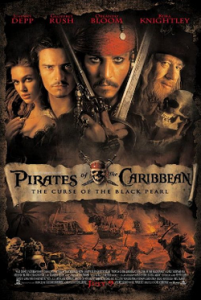
Interestingly, the ties of piracy and the slave trade almost made an appearance in the Pirates of the Carribean films.The concept for the beloved series is owed to the Pirates of the Caribbean ride in Disneyland, which features the three main characters in a different light. The movie, which catalyzed my interest in pirates, follows a reluctant partnership between the unfailingly chaotic and sometimes wise Captain Jack Sparrow, Will Turner–a young blacksmith’s apprentice devoted to the governor’s daughter–and headstrong Elizabeth Swann, who has been abducted by the crew of the infamous Black Pearl. Featuring supernatural elements in the form of a literal skeleton crew, sardonic humor, and a star-crossed romance, the first Pirates of the Caribbean film makes the world of seafaring swashbucklers seem like a lot of fun. A deleted scene in Pirates of the Caribbean: At World’s End (which I haven’t actually seen as a The Curse of the Black Pearl loyalist) dips more into the serious aspects of piracy, providing a backstory for Jack Sparrow that centers on his decision to free enslaved people rather than transport them to be bought and sold as chattel. Though this scene wasn’t kept in the final version of the film, it offers an intriguing characterization of the eccentric pirate Sparrow and reflects the way the films focus on the more noble aspects of piracy, and the general trend of viewing piracy through rose-colored glasses (or eye patch).
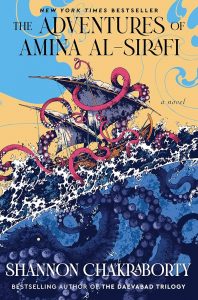
While Disney’s Sparrow recycles treasured piracy tropes in the service of nostalgia, there are more left-of-center examples of the genre. Perhaps my favorite pirate book is Shannon Chakraborty’s bestselling 2023 novel The Adventures of Amina al-Sirafi, of which I am impatiently awaiting the May 2026 sequel. It’s a very unique historical fantasy for a variety of reasons, including the protagonist, who is in her 40s rather than being the typical 16-25-year-old fantasy heroine. Amina has (mostly) left her pirate days behind her, retiring from her notorious life on the Indian Ocean to live a much more simple and modest existence with her young daughter. This life is interrupted when a former crewman’s mother proposes one last job with an incredible reward that would allow Amina and her family to live in comfort for the rest of their lives. Naturally, she takes it, but the job is much more dangerous than anticipated, and leaves Amina grappling with her faith, the vulnerability of motherhood, and run-ins with the supernatural. It’s a beautifully written novel with fascinating worldbuilding, humor, and characters you can’t help but love. And, in the words of Shannon Chakraborty in an interview with Barnes & Noble, “One person’s pirate is another person’s hero.”
Our modern perception of piracy is a testament to the power of literature in shaping our view of the world. The reality may not be as charming as the portrayals in books and movies like Pirates of the Caribbean, but isn’t that the point?