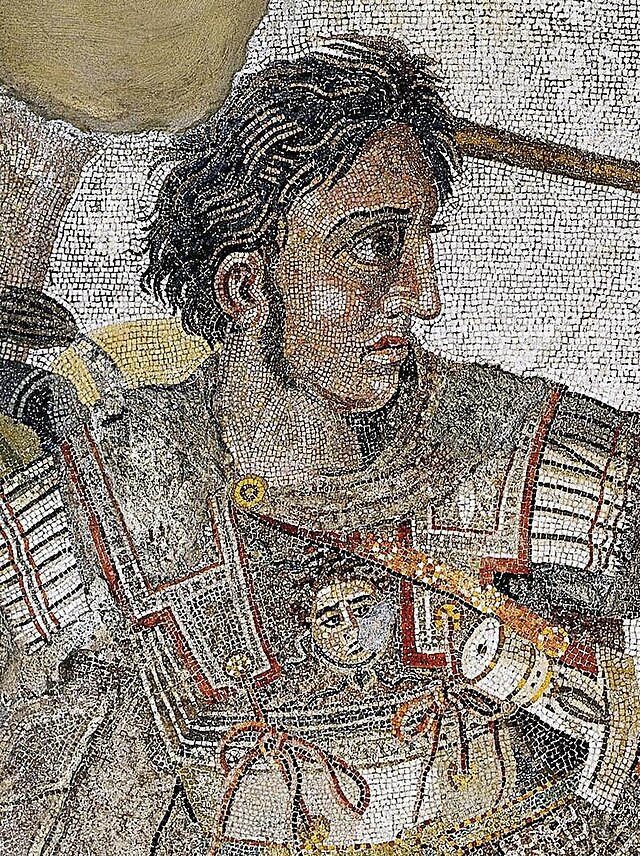
The Library of Alexandria was one of the most impressive collections of knowledge in the ancient world, located in one of the most important cities of the ancient world. It is named after that city, Alexandria, which is named after its founder, Alexander the Great. Many wonder: to what degree did Alexander play a role in Alexandria’s construction? It’s easy to understand why people are curious. Alexander the Great was a man believed by some in his time to be part divine, a story he himself perpetuated, whether as a tactic for widespread legitimacy or his own ego. He was known for his great ambition and doing things that nobody else could, and in some of the more intensely mythologized tales, things that were quite literally impossible. In addition to these popular tales, Alexander was also known for being an intelligent man who greatly admired intellectual pursuits. It requires no stretch of imagination to understand why people think that the man who valued intelligence as he did, and who wanted to “conquer the world,” would create a library said to hold “all the knowledge of the world.” However, while it is feasible, as some have proposed, that Alexander mentioned the idea of a library in Alexandria, he played no real role in its creation.
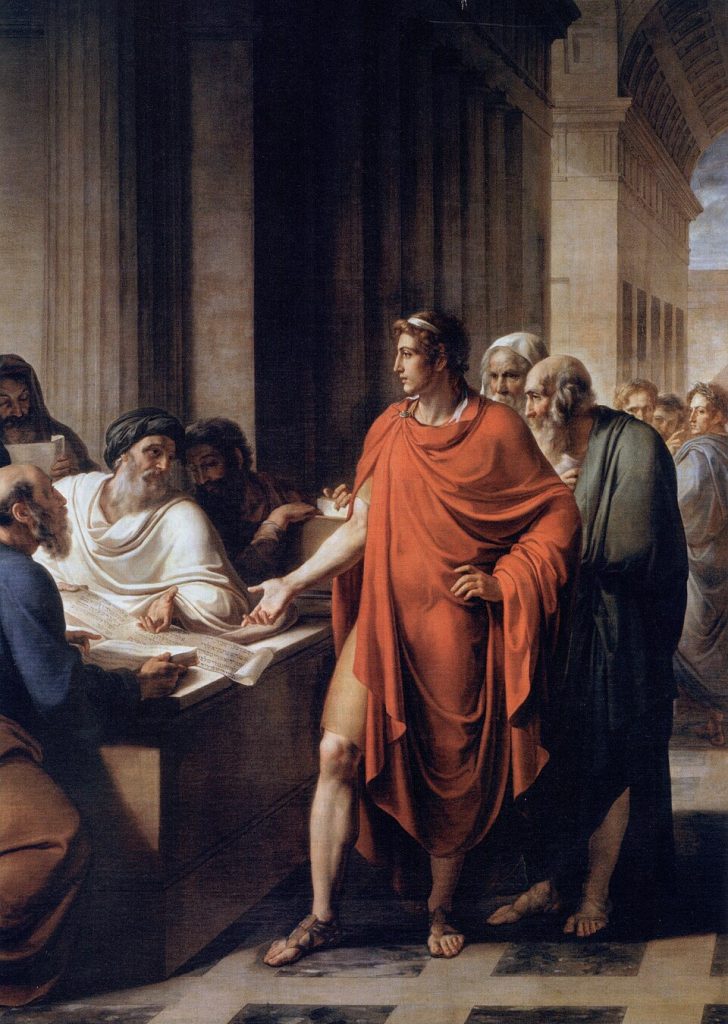
Even knowing Alexander was not directly involved does not entirely clear up the origin of the library. The oldest claim is that it was Demetrius of Phalerum who set the library up under the organization and reign of Ptolemy I. The issue with this claim is that it is derived from the *Letter of Aristeas*, which is now known to contain inaccurate information. Even more complicating to this idea is that it is now generally agreed upon that the library came into existence under the reign of Ptolemy II, rather than Ptolemy I, at which point Demetrius is known to have fallen out of favor with the Ptolemic court. Still, some argue that he did play a role in the early collection of texts, which is possible, as though the actual construction of the library was done under Ptolemy II, Ptolemy I is thought to have laid the groundwork for the library. Ptolemy I’s believed role in developing the idea of the library is part of why some believe Alexander did mention plans for a great library, as Ptolemy I was a childhood friend of Alexander’s, and went on Alexander’s campaigns with him.
Regardless, by Ptolemy II’s reign, the library had been created and was functioning. It was designed to be more than a regular library, they wanted it to be a global hub of knowledge. It is hard to know exactly what the library looked like, but there were at least two main buildings at the time of the original construction. There was the Mouseion, which was dedicated to the nine muses, the goddesses of different types of literature, science, and art. Fittingly, the Mouesion functioned as a research center, to both grow knowledge in those areas, as well as exchange them with other scholars. There was also the Biblion building, which was where the texts were held. It was adjacent to the Mouesion because the goal was not just to collect these books, but to analyze and translate them, so scholars would often work on analysis and translation within the research hub.
However, the library continued to be expanded. Part of this was because, as the goal was to collect all knowledge, which for them meant collecting a copy of every written text that was known, they needed space to hold all these texts. Another reason, though, was that this was not meant to just be a library. It looked more like a university, in that it offered places for scholars to live and eat, and was made up of different buildings and rooms for research and reading. In addition to housing books, it also offered observatories, lecture halls, scriptoriums, gardens, and some have suggested that there was also a zoo.
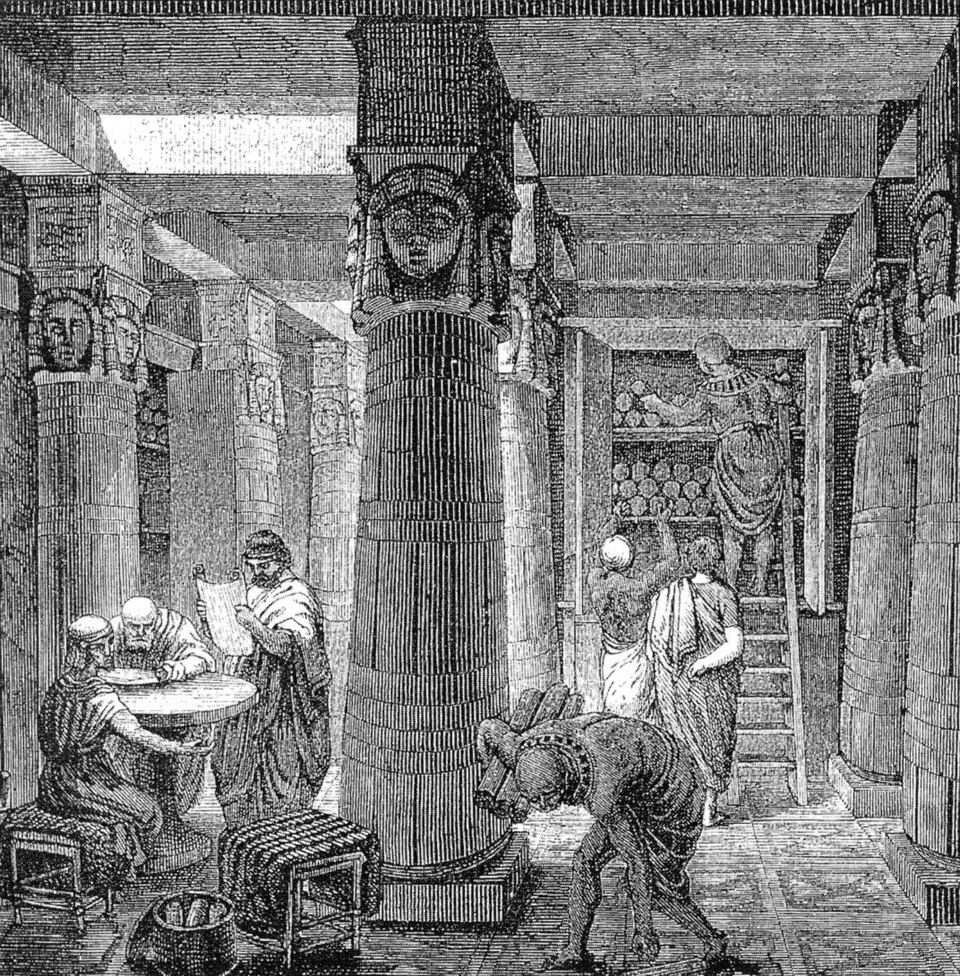
Still at the heart of the library, it was about the acquisition of knowledge through texts. Books at this time were written as scrolls, and they would have been stored in halls known as bibliothekai. The shelves were rectangular and ceiling-high, with the scrolls being stacked on top of each other. They were organized by subject, and it is said that above the shelves there was an inscription that said: “the place of the cure of the soul”. The value they placed on these texts meant they took the acquisition of works very seriously. They bought books, accepted reviewed submissions, picked books up from international trade trips, and borrowed books so as to translate and create copies of them. They applied no prejudice when acquiring books; they wanted to claim that they housed “all the books,” and therefore, they collected books from everywhere they could. One of the benefits of their aim of acquiring all global books was that their collection was known to be diverse and inclusive. In addition to librarians and scribes, the library employed many translators from different places and cultures to be able to keep up with books that were coming in. There is no exact known number for all the books that the library held, but it is suggested that at its height, it was between 200,000 and 700,000.
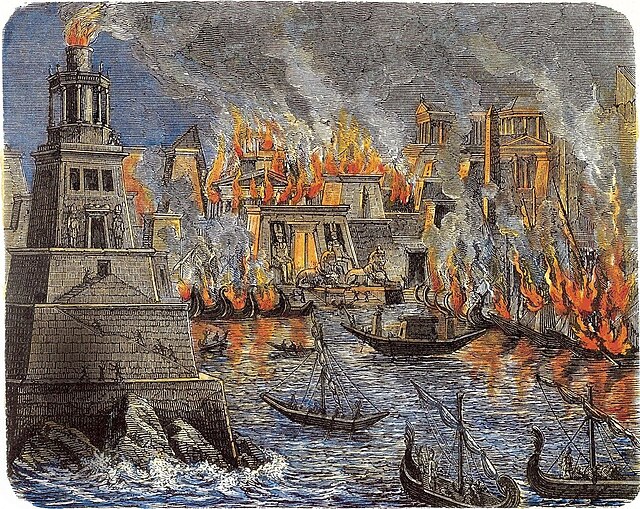
This is why many consider the “destruction” of the library to be one of the greatest losses of knowledge in human history. While it is certainly true that over time various losses have occurred, such as the infamous “burning of Alexandria”, it is also true that many of the texts that survived to the medieval period are because of the library of Alexandria. The library did not catch on fire and fall in one singular moment. Julius Ceaser did set fire to the library in 48 BC, and while certainly parts were damaged and lost, it is known to have survived that fire. Others will suggest that the library was destroyed by the Muslims in the 7th century. However, like with Ceaser, while the Muslim conquest very well could have contributed to the loss of knowledge, it is not solely responsible. Instead, the truth is that the library experienced a gradual decline. Between the partial losses from various conflicts, political instability, economic problems, natural disasters, and different priorities of successive rulers, the upkeep of the library became impossible.
It is understandable that people still speak of the tragic burning of Alexandria; it feels right that a library so great and glamorous would need a dramatic and tragic ending. However, this false narrative does nothing to truly honor the legacy of Alexandria, a place committed to knowledge and truth. We can honor the library of Alexandria by thinking of the texts that survived, the continuous effort for collection and translation meant that many books that would have been lost to time are not lost to us. The library set the standard for a comprehensive collection and interdisciplinary research, and many libraries today owe how they’re modeled to Alexandria. Callimachus of Cyrene, who developed the organization of Alexandria through categorizing by genre and creating the first “card catalog,” the pinakes, is credited with inventing the foundational system for how we organize books, catalogs, and libraries even to this day. Yes, there were many books lost to time, and it is tragic how much knowledge was lost, but it is a disservice not to look at what has survived time. There was such care and dedication undertaken in the name of this library that we are influenced by it even today, thousands of years after it existed.
Barksdale, Nate. “What Destroyed the Library of Alexandria?” History.Com, A&E Television Networks, 28 Oct. 2025, www.history.com/articles/library-of-alexandria-destroyed.
Chesser , Preston. “The Burning of the Library of Alexandria | OSU EHISTORY.” The Ohio State University , ehistory.osu.edu/articles/burning-library-alexandria.
“The Great Library of Alexandria: Fact, Myth, and Legacy.” The Archaeologist, 28 Aug. 2025, www.thearchaeologist.org/blog/the-great-library-of-alexandria-fact-myth-and-legacy.
Issa, Islam. Alexandria: The City That Changed the World. PEGASUS BOOKS, 2025.
Mark, Joshua J. “Library of Alexandria.” World History Encyclopedia, Https://Www.Worldhistory.Org#organization, 25 July 2023, www.worldhistory.org/Library_of_Alexandria/.
World History Edu. “What Was the Library of Alexandria and Why Was It Important?” World History Edu, 20 Feb. 2025, worldhistoryedu.com/what-was-the-library-of-alexandria-and-why-was-it-important/.
Featured Image: Map of ancient Alexandria, Egypt by Friedrich Wilhelm Putzger, 1901. This work is in the public domain.
Images: Alexander mosaic from the House of the Faun in Pompeii, 100 BC. This work is in the public domain.
Ptolemy Philadelphus in the Library of Alexandria by Vincenzo Camuccini, 1813. This work is in the public domain.
The Great Library of Alexandria by O. Von Corven, 19th century. This work is in the public domain.
The Burning of the Library of Alexandria by Hermann Göll, 1876. This work is in the public domain.