Written by Jess Joyce.
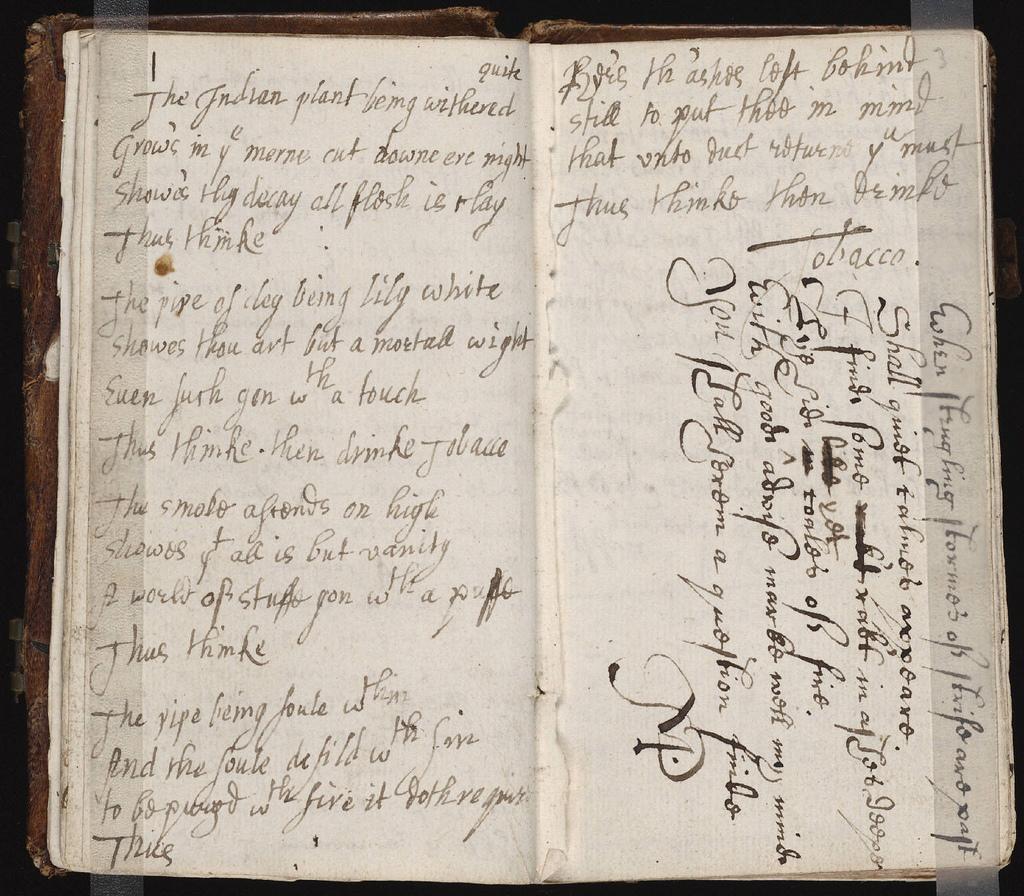
Today we have Google Drive, sticky notes, and digital calendars. Before these things, society had what were known as commonplace journals. As the name suggests, a common place to keep all of the information you have acquired about essentially anything. This technique can be dated back to the times of ancient Greece and Rome, even used by the big names like Aristotle, Seneca, Marcus Aurelius, etc. Unlike most trends, commonplacing never seemed to die out, only growing in popularity during the late medieval period, when book production and literacy grew. As people were in greater demand for legal professions, legislation, literature, and businesses, they needed a way to keep all of their loose ends in one place.
Many of these books contained very fragmented thoughts, poetry samples, religious findings, and other miscellaneous things. Most households would share one specific commonplace book, but the books were known to travel through communities as a way of sharing thoughts and ideas. The texts themselves would be shared alongside people reading aloud their information for sharing, which helps bridge gaps between those who were literate and those who were not. Some historians have referred to these journals as miniature libraries which could be used as windows into the lives of late medieval people. Revealing small yet significant details about community, culture, and the compilers themselves.
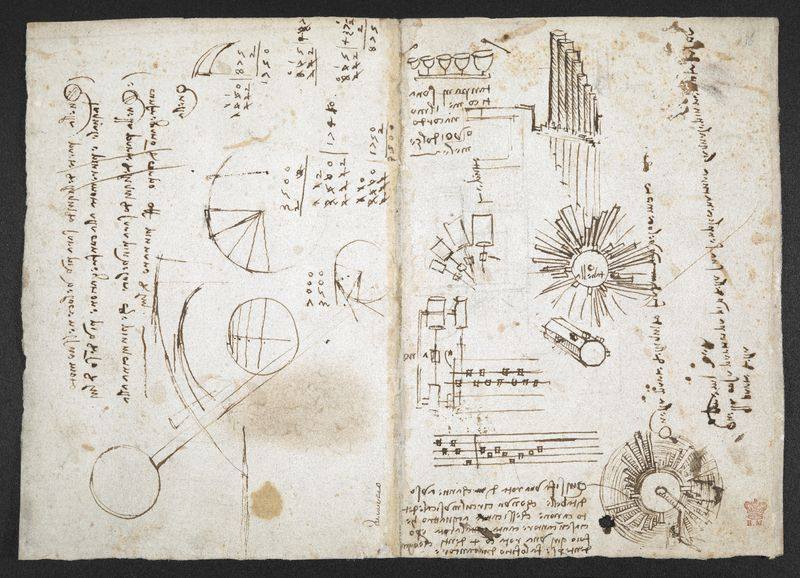
One commonplace book that has been preserved and studied is that of Robert Reynes of Acle, held in the Bodleian Library. What was found were texts ranging from several categories. He had collected business records, religious beliefs, local play scripts, and medical themes, amongst other things. A “brain dump,” if you will, him writing down things in fragments so he wouldn’t forget or things he would understand without fully fleshing out detail. Scholars also found that his writings combined vernacular language and Latin with bits from Middle English and Old French. Knowing this, it can be assumed that Reynes played a pivotal role in his Norfolk community as a storyteller and potential scribe. Some records suggest he was a church warden, establishing him as a community figure. Moving into more renaissance periods, Leonardo Da Vinci was known to keep these bound collections of thought. It was technically a collection of his art studies and thoughts, but it held the same sentiment as commonplace journaling. There were many others who followed suit in this as printing press resources became more accessible across Europe towards the late 15th Century, and of course as literacy was on the rise.

What is astonishing is how this trend kept up with the times. Several famous names in modernity, such as H.P. Lovecraft, Thomas Jefferson, and Ralph Waldo Emerson, all kept commonplace books for the same reasons Medieval people did. As with most things from previous centuries, commonplacing is making a comeback in the 21st century. In the 2000s, there was a huge rise in stationery consumption, everything from pens, notecards, clips, stickers, and journals. A company, which is now called Traveler’s Notebook, came out with a journaling system that would closely mimic the way ancient figures kept notes. In your package, you would receive a leather cover, usually a passport size, one journal, and a rubber band to secure it all. The idea behind this is that you could add or remove as many journals as you wanted, make it messy, decorate it, the sky was the limit with this simple structure. Traveler’s Notebook also emphasized that in order to create your own commonplace book, it must be unique to you. There is no need to run out and buy expensive journal systems or compare yours to others; the point is simply to create. The internet boomed with people sharing their journals, showing their multifaceted uses and how they were collections of their day-to-day lives/personalities. Soon, more companies were following this idea and coining them as commonplace journals. As popularity grew, so did education behind these journals and how so many powerful thinkers used them. People began to believe this simple daily habit could be the key to great success in life, especially in careers surrounding the arts and humanities.
Even in 2026, you can come across posts dedicated to how commonplace journaling changed their life. Making them smarter, a better writer, reducing screen time, and allowing themselves to carry around a small mosaic of their being. So, maybe consider taking this practice up for yourself. Getting started may seem intimidating, so try breaking it into categories, for example, a section dedicated to fun things you read, one for information you get in various TV shows, or even a section dedicated to fun facts you learn in class. Who knows, maybe history will study your commonplace book, a remaining physical artifact of a world that has gone digital.
Spanton, Amelia. “Meaning within Miscellany: The Value of Late Medieval Commonplace Books.” The York Historian, The University of York Student History Magazine, 21 June 2024, theyorkhistorian.com/2024/06/24/meaning-within-miscellany-the-value-of-late-medieval-commonplace-books/.
Ward, Arthur. “The Commonplace Book: A Renaissance Tradition Brought Online .” MSU MediaSpace, Michigan State University, mediaspace.msu.edu/media/%E2%80%9CThe+Commonplace+Book%3A+A+Renaissance+Tradition+Brought+Online.%E2%80%9D+-+Arthur+Ward%2C+Lyman+Briggs+College%2C+03+17+17/1_371330k7.
Watson, Dr. “A Brief Guide to Keeping a Commonplace Book.” Notebook of Ghosts, 1 July 2025, notebookofghosts.com/2018/02/25/a-brief-guide-to-keeping-a-commonplace-book/.
Jess Joyce is a first-year student at Ohio Wesleyan, intending to major in International Studies and Spanish with a pre-law focus. She is involved in the Global Scholars Program, Marching Bishops, and is a new member of Kappa Alpha Theta. She discovered the AMRS field of study through the Thrice Told Tales class she took this past semester, where she fell in love, especially with Medieval manuscripts and Breton lays (specifically werewolf tales). She hopes to continue her love for writing and history here at OWU.
Featured Image: Henry Tiffin’s commonplace book, 1760. Held at the Peabody Essex Museum. This image is in the public domain.
Images: James Marshall and Marie-Louise Osborn Collection, Beinecke Rare Book and Manuscript Library, Yale University. Free to use under CC Attribution 2.0 Generic License.

“Arundel 263 F.137v, F.136 Notes And Rough Diagrams”, Leonardo da Vinci’s notebook, 1480-1518. This work is in the public domain.
Commonplace Book by H.P. Lovecraft, illustrated by Michael Bukowski. Published by Lethe Press. Image used under fair use.