Eros and Psyche is one of the most beloved Greek myths. As with most myths, there are variations of how the story goes, but ultimately, the bones of the myth remain the same. Stephen Fry’s Mythos contains the tale of Eros and Psyche as it is commonly told.
The Myth:
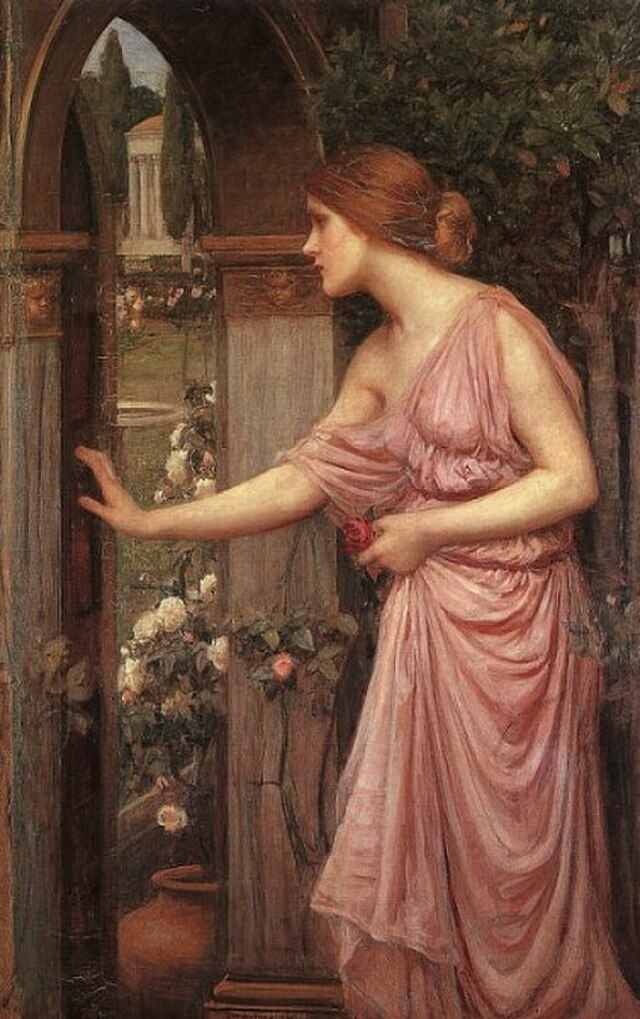
Psyche, a beautiful mortal princess, was so beautiful that the people of the kingdom began to worship her in place of Aphrodite, the goddess of love and beauty. In anger and jealousy, Aphrodite commanded her son Eros to use his arrow to make Psyche fall in love with the most hideous pig he could find. Eros attempted to follow his mother’s orders. He placed the pig in Psyche’s bedroom and prepared to strike Psyche as she awoke. But at the critical moment, he scratched himself with the arrow and fell desperately in love with her. Eros decided to fly away rather than shoot her with an arrow to make her love him in return, as he loved her so much, he did not want to deprive her of her choice. In the meantime, Psyche’s father went to an oracle to divine Psyche’s future, and a prophecy was revealed. Fry describes the prophecy: “Garland your child with flowers and carry her to a high place. Lay her on a rock. The one that will come and take her for its bride is the most dangerous being of earth, sky, or water. All the gods of Olympus fear its power. So it is ordained, so it must be”( Fry, 147).
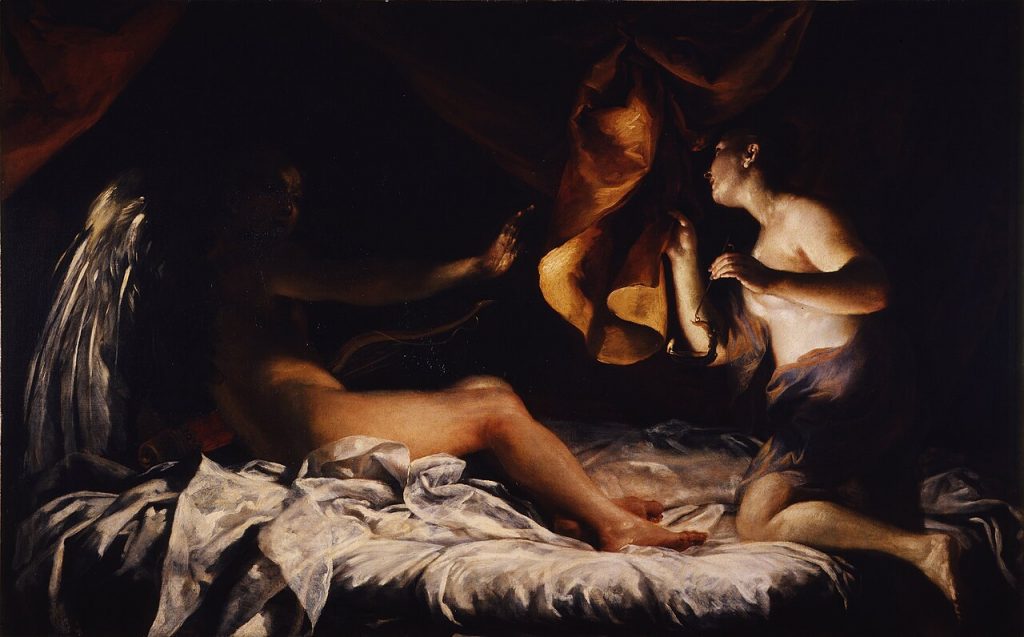
Psyche’s parents followed the oracle, and from the cliff, Psyche was swept away by the west wind Zephyrus. She arrived at a magical palace, with invisible servants who would do her bidding. Eros would then come to Psyche every night, with the only rule that she could never look upon his form or learn his name. As time passed, Psyche fell in love with Eros in return, and they spent a blissful year together. While happy, Psyche was lonely during the day when her husband was not around, and she asked him to let her sisters visit. While Eros warned her against this idea, he could not bring himself to deny her. Psyche’s sisters, out of jealousy for Psyche’s beauty, happiness, and magical home, convinced her that Eros was a monster with ill intent and that she must look at him. Psyche, scared for herself and her unborn child with Eros, which he had told her she was expecting, gave in to her fear and followed her sister’s instructions. She waited until he fell asleep and gazed upon his form by the light of a hand-held lantern. She recognized him immediately as Eros, from his otherworldly beauty and great white wings. In her relief and joy, she accidentally spilled hot wax on Eros. Eros woke and was devastated by her betrayal, causing him to fly away and leave her behind. Aphrodite discovered what had happened between Psyche and her son, and she sought vengeance. She gave Psyche three trials, meant to be impossible, and the last one forced Psyche to go into the underworld, where, in her grief, she decided to remain.
However, Eros soon learns that Psyche has fled to the land of the dead to escape Aphrodite. He immediately flies to Olympus and demands an audience with Zeus. Zeus, upon learning their story, rescues Psyche from the underworld, but excoriates Eros, “… you have too long been a foolish, impudent, and irresponsible boy. That you love and are loved will be the making of you and may save the world from the worst excesses of your mischievous and misdirected arrows. Psyche, come and drink from my cup. This is ambrosia, and now that you have tasted it, you are immortal. Here, witnessed by us all, you will forever be yoked with Eros. Embrace your daughter-in-law, Aphrodite, and let us all be merry” (Frye, 164). Thus, Eros and Psyche were married. Psyche then became the goddess of the human soul, and she gave birth to her and Eros’s daughter, Hedone, the goddess of pleasure.
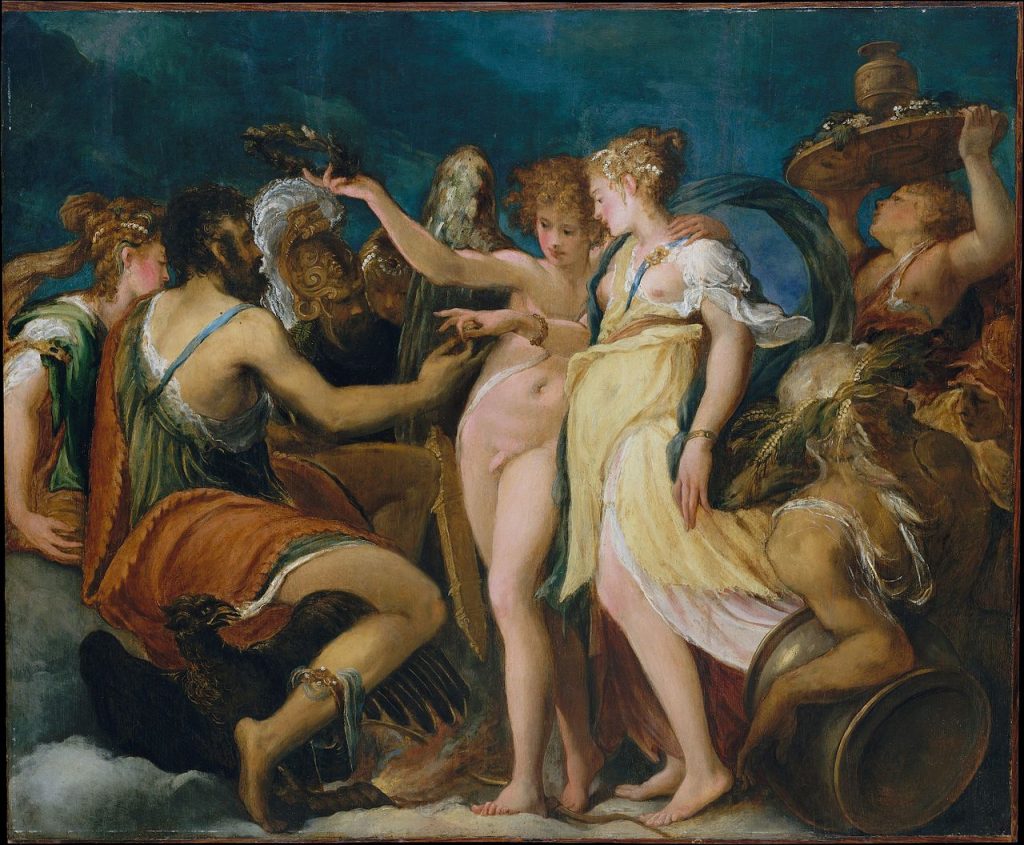
The myth is certainly a beautiful tale of love’s endurance, and perhaps rare in its happy ending. It’s no surprise that it’s inspired countless pieces of literature and art. However, to pinpoint what exactly it is about the myth that has made it so captivating across centuries is no easy task. Stephen Fry notes some interesting background information that helps explain continued interest in the myth.
It should be noted that it is never denied that Psyche has married a monster, or that all of the Greek gods, even Zeus, fear Eros. In fact, part of the reason Zeus saved Psyche was in hopes of taming Eros. It is important to understand that the Greeks had several different words for love in all its different forms, and they had gods that represented those different kinds of love. Eros is the leader of the Erotes (the gods & goddesses of love, excluding Aphrodite, who rules over them all), and he represents specifically physical love and sexual desire. Eros, both as a god and as the Greek word for sexual and physical love, represents “The kind [of love] that gets us into the most trouble. So much more than affectionate, so much less than spiritual, eros and the erotic can lead us to glory and to disgrace, to the highest pitch of happiness and the deepest pit of despair” (Fry, 145). There is something inherently dangerous in the love that Eros represents, and Fry makes sure to note that Eros’s version of love has conquered every single Olympian at least once. Love with that sort of power is, in its own way, something monstrous.
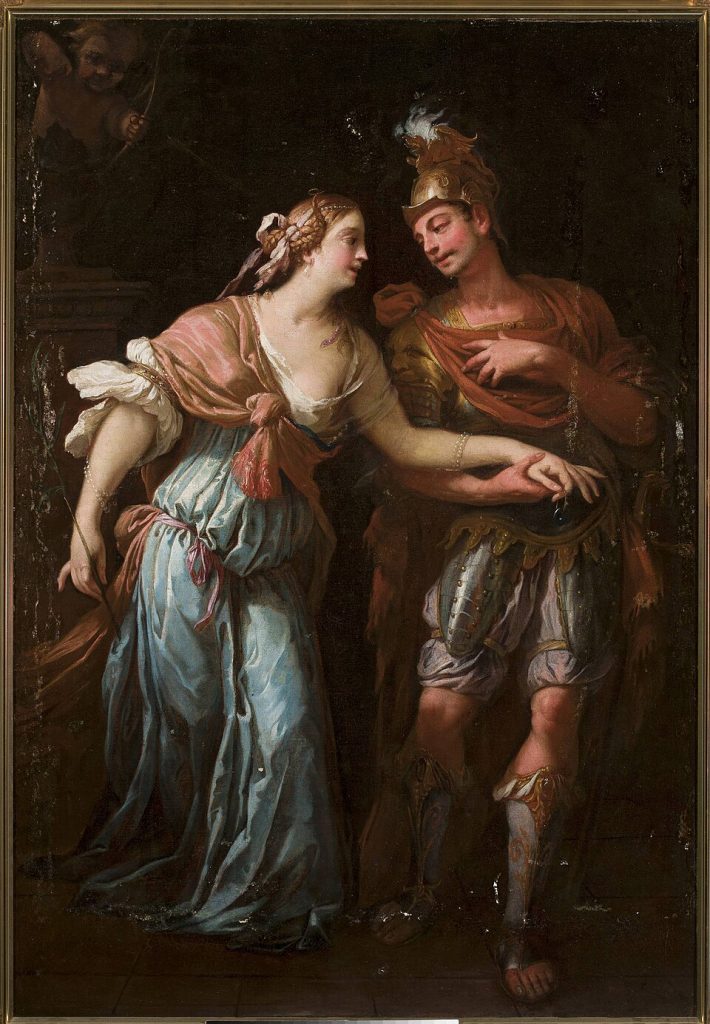
Eros’s parentage should also be considered. His mother was Aphrodite, but his father was Ares, the god of war. Eros’s version of love being something dangerous and powerful makes sense, given that he is the product of love and war. He contains in him all that love and war can be: the glory, the grief, the chaos, and the unpredictability. Eros does not shy away from the destructive nature and power of love. He exists at the intersection of love and conflict, creating space for a wild, violent, passionate kind of love that is capable of bending the strongest of wills. Even his weapon fits his dual parentage: his arrows are sudden and painful, and no one can resist their force. Given his frequent mischievous uses of his bow, the fear of him is even more understandable. However, this does not negate his mother’s side. He represents all that love can bring, and as Fry notes, “Perhaps he [Eros] was a monster after all. But he could be sensitive and sweet as well as capricious and cruel” (Fry, 152). Moreover, at Psyche and Eros’s wedding, “All was laughter and delight… Aphrodite danced with Ares, and Eros danced with Psyche. And they dance together still to this very day” (Fry, 165). It is easy to imagine, in some ways, Eros and Psyche as a new version of Eros’s parents, that which is beautiful falling in love with that which is monstrous, perhaps even softening it.
However, there is an important distinction between these two tales, and that is that Psyche is mortal. She gets made into the goddess of the human soul, but before that, she is just another human. There is emphasis on Psyche’s character, her sweet nature. She is easily manipulated by her sisters because it never occurs to her to mistrust them; her love is something honest, open, and pure. This does not mean Psyche’s softness makes her a weak character. She enacts revenge on her sisters for sabotaging her marriage, and she shows a tenacity fundamental to the human spirit in the face of her trials, and perhaps most importantly, love. She represents all the strength required of the soul, not only to love, but to continue to believe in love in spite of all the human pains one must endure in their lifetime.
Psyche and Eros, the soul and the physical respectively, combine the physical passion, with a connection of soul, felt but not tangible. They represent all that we hope love can be. A love that can be blind, that can endure and overcome, that forgives and heals from hurts, and, of course, a love that lasts forever.
Featured Image: Psyché et l’Amour [Psyche and Cupid/Eros] by François Gérard, 1798. This work is in the public domain.
Images: Psyche Opening the Door Into Cupid’s Garden by John William Waterhouse, 1904. This work is in the public domain.
Amore e Psiche [Cupid and Psyche] by Giuseppe Maria Crespi, 1707-1709. This work is in the public domain.
The Marriage of Cupid and Psyche by Andrea Schiavone, 1550. This work is in the public domain via Universal Public Domain Dedication.
Venus and Mars by Franciszek Smuglewicz, 1770. This work is in the public domain.
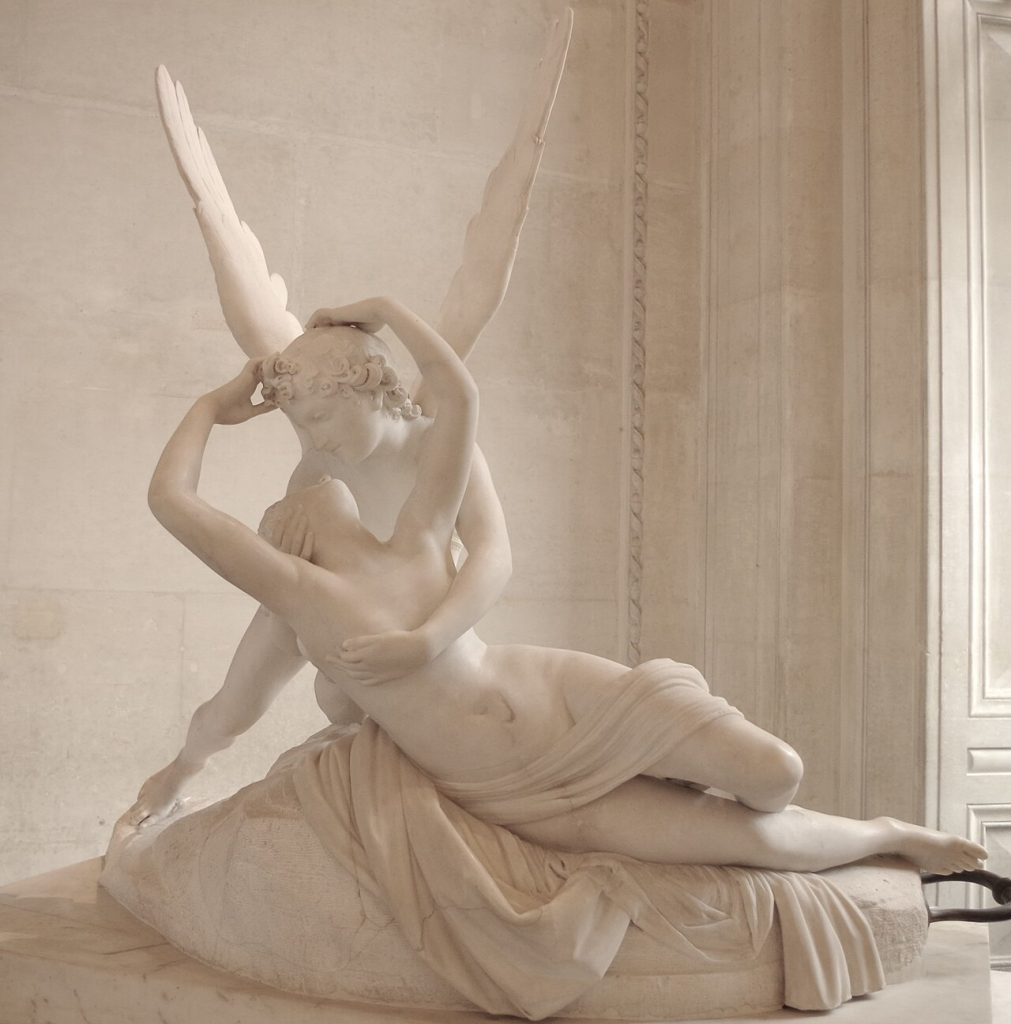
Amore e Psiche/ Psyche Revived by Cupid’s Kiss by Antonio Canova, 1793. This work is in the public domain via Universal Public Domain Dedication.